




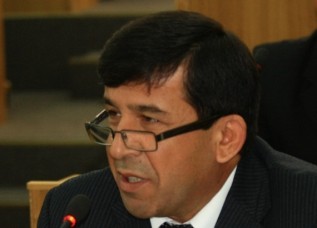
DUSHANBE, January 10, 2014, Asia-Plus -- Chairman of the Majlisi Namoyandagon (Tajikistan’s lower chamber of parliament) Committee on Legislation and Human Rights, Mahmadali Vatanov, who is also one of authors of the amendments proposed to the country’s election legislation, has clarified those amendments.
According to him, extension of party lists from 30 to 45 percent does not mean that the number of deputies elected from party list will increase from 22 to 28. “Extension of the party lists gives political parties an opportunity to nominate more candidates and have more reserve to replace retiring deputies elected from the party lists,” Vatanov said.
We will recall that on January 6, Muhamamdato Sultonov, a spokesman for the Majlisi Namoyandagon, quoted MP Vatanov as saying that the draft amendments, in particular, provide for increasing the share of deputies elected from political party lists from 30 to 45 percent.
“The draft amendments also provide for regulation of the process of voting for Tajik citizens residing abroad. Polling stations established abroad will be headed by heads of Tajikistan’s representative offices in those countries. Besides, under the current election legislation, only 30 to 3,000 people can vote at a polling station. The amendments provide for cancelling this requirement for polling stations set up for Tajik citizens residing abroad. More people can vote at those polling stations,” Vatanov stressed.
According to him, the draft amendments also provide for reducing the electoral deposit required from each candidate from 8,000 somoni to 4,000 somoni and increasing air time for candidates.
“The draft amendments also prohibit local officials from presiding over candidates’ meetings with voters,” MP noted.
Vatanov said that they had taken into consideration recommendations of the OSCE Office for Democratic Institutions and Human Rights (ODIHR) while working out the amendments to the RT Law “On Election to the Majlisi Oli.”
The Majlisi Namoyandagon consists of 63 deputies, and currently, 22 of them are elected proportionally from political party lists in a single nationwide constituency with a 5 percent threshold for seat allocation and forty-one deputies are elected in single-mandate constituencies under a two-round majoritarian system.


GBAO and Khatlon province complete spring draft target early
Chronicle of the month: March, 2026
Donald Trump states US ready to end war with Iran without a Deal
Kyrgyzstan launches domestic production of national currency
Windy April: weather forecast for Tajikistan
Tajikistan faces continued religious freedom challenges
The Judo Grand Slam in Dushanbe: what to expect
New developments in Isfara: schools, power substation, and coal mine opened
Iran claims drone factory in Tajikistan, but no evidence surfaces
Nuclear raid or breaking the blockade: why Trump wants thousands of Marines and paratroopers off the shores of Iran
All news