




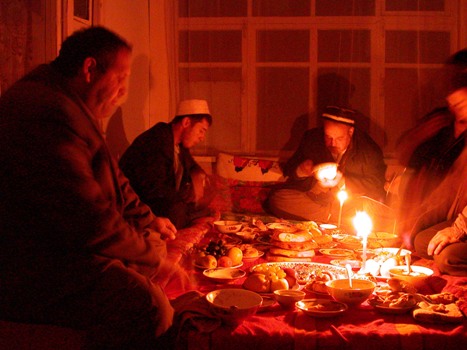
DUSHANBE, March 30, 2012, Asia-Plus -- Despite the recent temperature rise, electricity rationing is still in effect in the provinces.
Ending electricity rationing is out of the question until the second half of April, though the water flow in the Vakhsh River has increased, Nozir Yodgori, a spokesman for Barqi Tojik (the state-owned utility responsible for generation, transmission, and distribution of electricity in Tajikistan), said Friday afternoon.
“Friday morning, the water flow in the Vakhsh River was at 300 cubic meters cubic meters per second, while at the beginning of the week the water flow in the Vakhsh River was little more than 190 cubic meters per second,” Yodgori noted.
As of March 30, water levels at the reservoir powering the Norak hydroelectric power plant (HPP) were at the level of 859, the spokesman said.
Meanwhile, a source at Barqi Tojik, who wanted to remain unnamed, says the power holding is gradually increasing the supply of electrical power to residential customers.
In the spring and summer, Tajikistan’s hydropower plants generate a huge amount of electricity that is exported to neighboring countries, but in the autumn and winter, especially if the summer was dry and water levels in reservoirs are low, electricity rationing is introduced in the country.
We will recall that Barqi Tojik announced on October 13, 2011 the imposition of a new rationing for electricity supplies throughout the country. The rationing reportedly went into effect in the regions, with the exception of the capital Dushanbe and other large cities of the country.
Meanwhile, electricity rationing was introduced in Khujand, the capital of the northern Sughd province on February 10 following the city’s rising electricity consumption. Restrictions have not affected ‘strategic sites’ such as hospitals, airport, industrial enterprises, schools and kindergartens. On March 12, rotational power cutoffs were introduced in the city. The city was divided into several sectors and electricity supply to them is cut off alternately for two hours in the morning and two hours in the evening.
Measures rationing electricity supplies are usually introduced in all regions except Dushanbe and seek to curb the country''s rising electricity consumption. The rationing is introduced in October or November and lasts through March or April next year. The rationing results in the supply of daily electrical power being reduced to 12 or 10 hours. In addition to curbing rising consumption, the move also stems from a decline in the water level in the country''s reservoirs powering the main hydroelectric power plants.


GBAO and Khatlon province complete spring draft target early
Chronicle of the month: March, 2026
Donald Trump states US ready to end war with Iran without a Deal
Kyrgyzstan launches domestic production of national currency
Windy April: weather forecast for Tajikistan
Tajikistan faces continued religious freedom challenges
The Judo Grand Slam in Dushanbe: what to expect
New developments in Isfara: schools, power substation, and coal mine opened
Iran claims drone factory in Tajikistan, but no evidence surfaces
Nuclear raid or breaking the blockade: why Trump wants thousands of Marines and paratroopers off the shores of Iran
All news
Авторизуйтесь, пожалуйста