




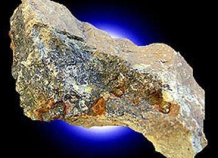
Exploration of uranium fieldsin the west of Tajikistan is expected to be completed in 2015, AzimIbrohim, Head of the main Geology Directorate under the Government of Tajikistan, told Asia-Plus in an interview.
According to him, Tajik geologists are currently actively working on two uranium-containing fields in the Hisor district. “The national budget has provided funds for financing the geological prospecting works,” Ibrohim stressed.
“To-date, Russian nuclear energy state corporation, Rosatom, and one French company have shown interest in uranium-containing fields in Tajikistan,” said Tajik chief geologist. “The Tajik government is currently conducting negotiations with the French company; the sides, however, have not yet reached agreement on carrying out joint work.”
As far as Rosatom is concerned, this Russian state corporation has reportedly been seeking cooperation on mining uranium in Tajikistan for many years.
According to some Russian media sources, the Russian government has approved draft agreements on cooperation between the government of Russia and the governments of Tajikistan and Russia on using nuclear energy for peaceful purposes.
Interafax reports that the agreements, submitted by Rosatom, in particular, regulate the export of nuclear materials and technologies from Russia. Nuclear materials transferred to the Central Asian countries under these agreements cannot be enriched to 20 percent or exceed uranium-235 isotope, or be enriched and processed without the preliminary written approval of Russia.
The agreements also regulate the re-export and transfer of nuclear materials by Kyrgyzstan and Tajikistan to other countries.
Under the agreements, the countries will set up joint coordinating committees on the basis of which working groups will be formed to conduct research and development work on the peaceful use of nuclear energy.
The northern city ofTaboshar is one of ten Soviet-era nuclear sites in Tajikistan. While a part of the Soviet Union, Sughd province was a center for both the extraction and enrichment of uranium. Mines in Taboshar and Adrasman provided uranium to the Leninabad Mining and Chemical Combine (now the Vostochnyy Rare Metal Industrial Association, or Vostokredmet) in the city of Chkalovsk. The then-Leninabad plant reportedly processed up to 1,000,000 metric tons of uranium a year to enrich yellowcake and uranium hexafluoride and provided the material for the USSR’s first nuclear weapon.
After the fall of the Soviet Union, uranium enrichment largely stopped, and Tajikistan joined with Russia, the United States and the international community to control its nuclear sites. Tajikistan signed the Non-Proliferation Treaty NPT in 1994, the Comprehensive Nuclear Test Ban Treaty (CTBT) in 1998, became a member of the International Atomic Energy Agency (IAEA) in 2001 and in 2006, along the with other Central Asian states of the CIS, signed a treaty creating a Central Asia Nuclear-Weapon-Free-Zone (CANWFZ). Tajikistan is also a participant in the Global Threat Reduction Initiative (GTRI) whose mission is to “reduce and protect vulnerable nuclear and radiological materials located at civilian sites worldwide.”
The Jamstone Foundation reports that while the uranium deposits in northern Tajikistan are believed to be exhausted, Tajik officials maintain that the mountainous, southeastern Gorno-Badakhshan region is rich in uranium and other minerals. Tajik authorities reportedly estimate Tajikistan’s potential uranium reserves to account for 14 percent of the world supply.


GBAO and Khatlon province complete spring draft target early
Chronicle of the month: March, 2026
Donald Trump states US ready to end war with Iran without a Deal
Kyrgyzstan launches domestic production of national currency
Windy April: weather forecast for Tajikistan
Tajikistan faces continued religious freedom challenges
The Judo Grand Slam in Dushanbe: what to expect
New developments in Isfara: schools, power substation, and coal mine opened
Iran claims drone factory in Tajikistan, but no evidence surfaces
Nuclear raid or breaking the blockade: why Trump wants thousands of Marines and paratroopers off the shores of Iran
All news
Авторизуйтесь, пожалуйста