




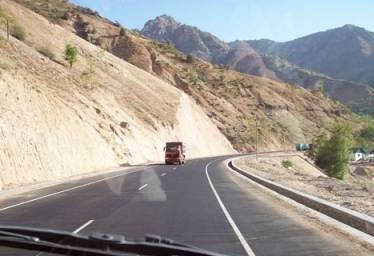
DUSHANBE, June 10, 2013, Asia-Plus -- To increase the sustainability of roads through improved maintenance and financing, the Ministry of Transport of Tajikistan is introducing a performance-based maintenance (PBM) scheme, the Asian Development Bank (ADB) Tajikistan Resident Mission (TJRM) said.
The initiative is reportedly supported by ADB under the ongoing phase 3 of the Dushanbe-Kyrgyz border road rehabilitation project.
“The government, with support from ADB and other development partners, has invested heavily in rehabilitating roads,” said C.C. Yu, ADB’s Country Director for Tajikistan. “Maintaining these roads in good condition in all weathers poses a huge challenge, and ADB supports innovative and cost-effective solutions based on open and transparent competitive bidding.”
The PBM scheme will be first piloted along two segments of the Dushanbe-Kyrgyz border road: a 76-kilometer section from Vahdat to Obi-Garm, and a 73-kilometer section from Nourobod to Nimich, press release issued by the ADB’s TJRM on June 10 said. PBM involves outsourcing road maintenance operations to the private sector.
Following open and transparent bidding, the Ministry of Transport signed 3-year contracts with two successful bidders, Gayur-1 Company, and Innovative Road Solutions. These contractors will be responsible for maintaining the two sections of the road at pre-determined performance targets, and will be paid for achieving those targets.
ADB financed preparatory works, and financing for the PBM contracts will come from government counterpart funds of $4.0 million.
To monitor public perception and customer satisfaction, special “hotlines” will be established for road users and residents to report defects on the sections of the road covered by the scheme. Hotline telephone numbers will be posted prominently along the road.
Tajikistan joined ADB in 1998, and to date, the institution has approved total assistance of around $980 million in concessional loans, grants and technical assistance to the country. ADB’s operations benefit the population by reducing isolation, increasing communication, broadening access to electricity, improving social services, and creating more income-generating opportunities.


GBAO and Khatlon province complete spring draft target early
Chronicle of the month: March, 2026
Donald Trump states US ready to end war with Iran without a Deal
Kyrgyzstan launches domestic production of national currency
Windy April: weather forecast for Tajikistan
Tajikistan faces continued religious freedom challenges
The Judo Grand Slam in Dushanbe: what to expect
New developments in Isfara: schools, power substation, and coal mine opened
Iran claims drone factory in Tajikistan, but no evidence surfaces
Nuclear raid or breaking the blockade: why Trump wants thousands of Marines and paratroopers off the shores of Iran
All news
Авторизуйтесь, пожалуйста