




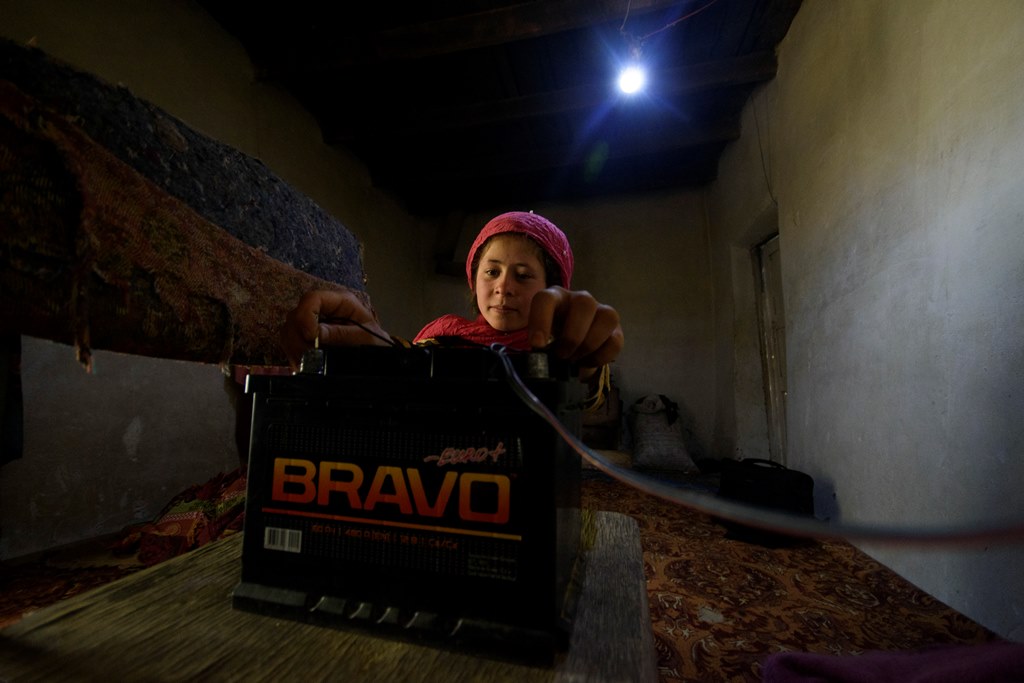
Since September 21, residents of rural arears across Tajikistan have faced unofficial limits on electricity, with many reporting that power is available only for a few hours per day. The rolling blackouts, which have affected both urban and rural areas, are causing frustration and raising calls for transparency from Barqi Tojik, the state electricity company.
Limited power across regions
In rural areas, electricity is now often restricted to 8-10 hours daily. Residents of Khatlon and Sughd provinces, as well as districts subordinate to the center report daytime outages from 8:00 to 17:00 and evening outages from 21:00 to 5:00. In the Shahrinav district, power has been unavailable since the night of September 21, leaving households in the dark for most of the day. Similar disruptions have been reported in Hisor, Kulob, Vahdat, Vose, Fayzobod, Jayhun, Roudaki, and Bokhtar.
In Dushanbe, residents of Shohmansour and Ismoil Somoni districts have experienced multiple power interruptions daily.
Public Reaction
Social media users have expressed frustration, with some describing the situation as a return to the “stone age.” Parents worry about children unable to do homework, while workers struggle to continue daily tasks. Reports suggest that in some areas, power is now provided for as little as six hours per day.
Others have urged citizens to conserve electricity, suggesting that responsible use could encourage authorities to increase supply. Comparisons have been drawn to the 2007-2008 blackout season, when power was provided for only an hour per day.
Billing discrepancies and complaints
Residents have also complained about incorrect electricity bills, with some reporting extra kilowatt-hours being added, resulting in unnecessary debts. In some cases, disputing the charges has led to the debt being removed, though interactions with company employees have reportedly been confrontational.
Authorities call for energy conservation
In response, Tajik authorities are urging citizens to save electricity, framing the restrictions as a temporary measure to stabilize supply. The State Energy Supervision Agency is conducting outreach campaigns across regions, providing guidance on optimal electricity use and monitoring illegal consumption. For example, one recent case involved a resident using a pump system without a meter, causing 3,480 somonis in losses.
Looking ahead: energy independence in 2027?
The electricity limit usually starts in October, but in recent years it has begun as early as late September, driven by rising demand and limited production during peak months.
Prime Minister Qohir Rasoulzoda emphasized that under directives from President Emomali Rahmon, Tajikistan aims to achieve full energy independence in 2027. Projects such as the completion of the Roghun Hydropower Plant, modernization of existing hydro stations, and development of solar energy are expected to significantly increase electricity production. Once completed, these projects should eliminate the need for rolling blackouts and ensure a reliable energy supply for households and industry.
 Руcский
