




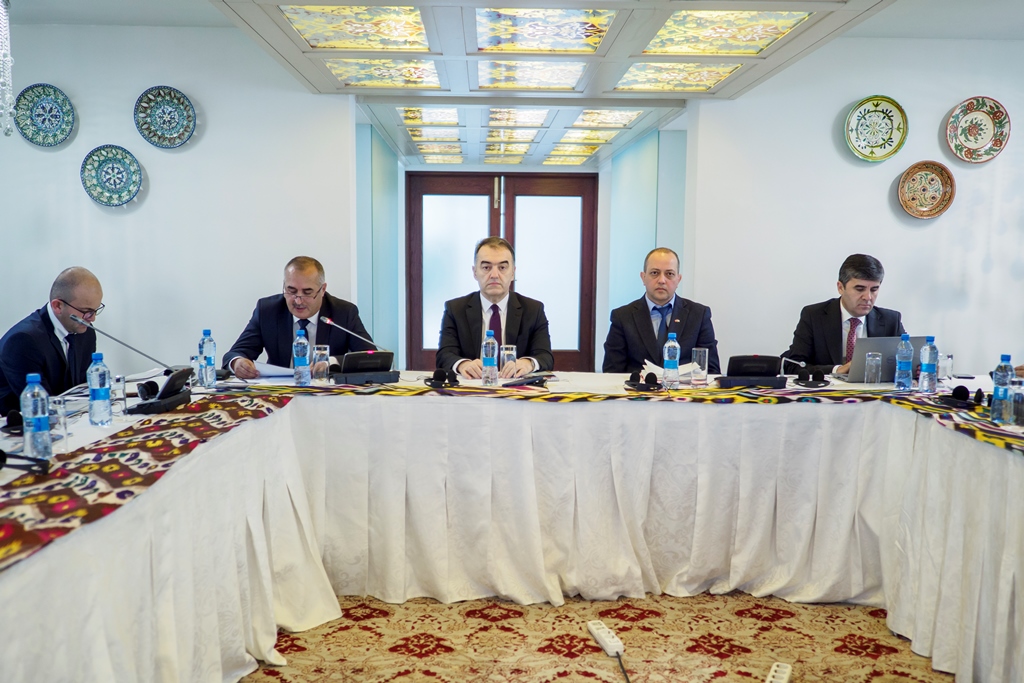
Tajikistan develops a new long-term Power System Plan (PSP) for the Gorno-Badakhshan Autonomous Region (GBAO) for the period up to 2050 in partnership with the Hydropower Sustainability Alliance (HSA).
The PSP supports national energy security, regional development and climate resilience, while laying the foundation for future infrastructure investment in GBAO.
The Ministry of Energy and Water Resources of the Republic of Tajikistan, together with relevant national ministries and agencies, has reviewed the proposed PSP 2025–2050 for GBAO, a landmark blueprint that places hydropower sustainability at the center of long-term energy planning. Developed with major technical support from the HSA, the plan integrates two global good-practice tools – HydroSelect and the Hydropower Sustainability Standard (HSS) – as core mechanisms for guiding future investments.
HydroSelect is a new tool intended for selecting hydropower sites. Its application – together with HSS certification for new projects reaching investment readiness p is embedded directly into a long-term power system plan. Together, these tools are poised to ensure that GBAO’s future hydropower development remains transparent, environmentally responsible and socially inclusive.
Supported by the Swiss State Secretariat for Economic Affairs (SECO) and prepared in partnership with Pamir Energy, the PSP offers the first integrated assessment of how GBAO can meet rising electricity demand while keeping costs and impacts low. As households increasingly shift to electric heating and transport, the plan evaluates four development scenarios and identifies a combination of conventional hydropower, solar PV and pumped storage as the most sustainable and resilient pathway.
Daler Juma, Minister of Energy and Water Resources of Tajikistan, said: "The presented Power System Plan will enable us to build a long-term vision for GBAO, outlining how we can meet rising energy demand while supporting regional development, energy security and climate resilience.
Hydropower sustainability at the core of the PSP
HSA has worked closely with partners in Tajikistan to embed ESG safeguards, rigorous site screening and future project certification into the structure of the PSP.
This work builds on several years of collaboration. The Sebzor Hydropower Project, located in the GBAO region, was the world’s first to be certified under the HSS. The Project was implemented by Pamir Energy under financial and technical support from the German Government and the European Union through German Bank KFW.
This PSP is a global first in directly coupling long-term power planning with internationally recognized sustainability assessment tools for hydropower development.
“Tajikistan is showing the world what sustainability-led energy planning looks like,” said Alain Kilajian, Deputy Executive Director of HSA.
“HydroSelect will guide transparent, early-stage site comparisons, while the Hydropower Sustainability Standard will ensure that every future project will meet clear, credible ESG requirements. This is one of the most comprehensive applications of HSA’s tools to date, and we are proud to support Tajikistan as it charts a resilient, low-carbon future.”
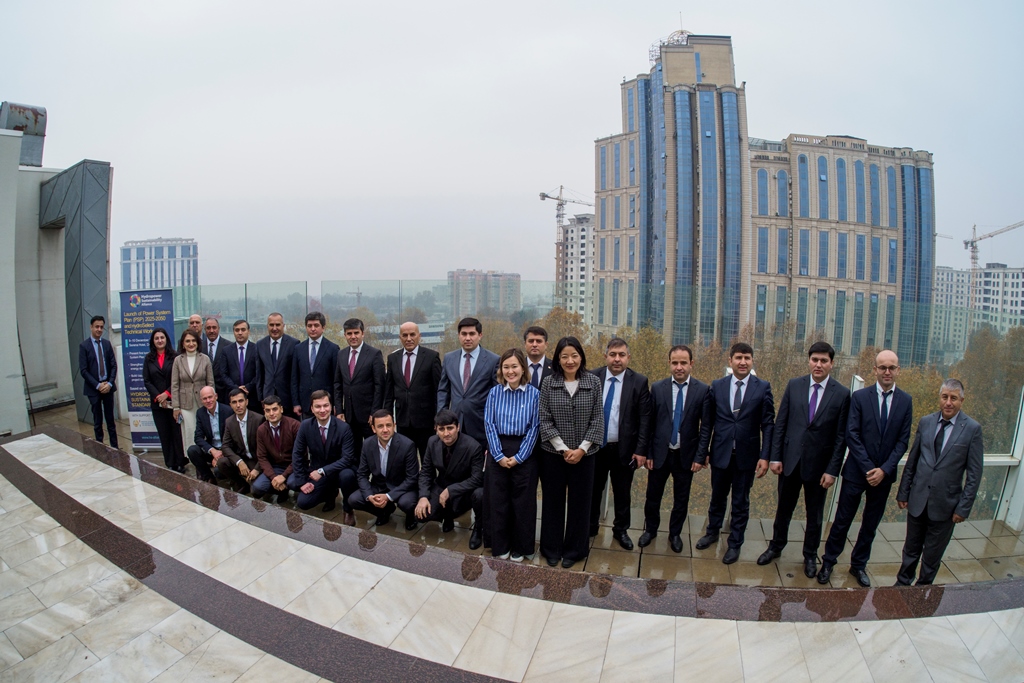
Building on 25 years of progress in GBAO
The PSP also builds on the progress made under Pamir Energy’s 25-year concession, which transformed a degraded mid-20th century energy system into one with universal access and affordable, reliable power.
Over the next 25 years, the plan aims to extend these gains by adopting a more diverse mix of technologies and locations, including new solar PV expansion, run-of-river schemes and potential pumped storage facilities.
Amrikhon Raimov, CEO of Pamir Energy, said: “The proposed plan presents a balanced and forward-looking pathway for the region. We welcome the integration of HydroSelect and the Hydropower Sustainability Standard, which together give us a clear and responsible framework for selecting, designing and delivering the right projects in the right places.
As set out in the PSP, the preferred Diversified Renewables (DIV) scenario will require further modelling of storage needs, identification of suitable hydropower and solar PV locations, and ongoing review every five years to ensure the plan remains aligned with new technologies and evolving local conditions.
The Hydropower Sustainability Alliance works to drive positive change in the hydropower sector by building knowledge, promoting accountability, empowering people and embedding sustainable practices.
The Hydropower Sustainability Standard (HSS) is a robust assessment and certification framework that ensures accountability in hydropower development. It charts a path for harnessing hydropower's potential to drive positive impact, benefiting both communities and our environment. The HSS propels the responsible growth of this essential energy source, balancing progress with safeguarding our world.
The HSS is governed by a multi-stakeholder body, the Hydropower Sustainability Council (HS Council). This governing body includes representatives from governments, industry, civil society and financiers. This inclusive approach to governance ensures that all stakeholder voices are heard in the shaping of the use of the HS Standard.
Certification is carried out by accredited independent assessors, ensuring credibility and consistency across all regions and project types.
HydroSelect is an early-stage decision-support tool developed by HSA to help plan and compare potential hydropower projects. It provides a structured methodology to screen sites based on technical, environmental, social, and governance criteria, helping developers, planners, and financiers make transparent and evidence-based decisions. When used alongside the Hydropower Sustainability Standard, HydroSelect supports the selection of projects that are both viable and aligned with best-practice sustainability principles.
Pamir Energy is Central Asia’s first public–private partnership and a recognized model for clean, inclusive and climate-resilient rural electrification. Since the start of its 25-year concession in 2002, the company has mobilized over USD 280 million in blended investment to rehabilitate hydropower plants and modernize networks across GBAO, increasing access to reliable, affordable and renewable electricity from just 13% of households to nearly 100% today and building strong local capacity to operate a financially sustainable utility. Pamir Energy’s work has been highlighted by the United Nations Economic Commission for Europe (UNECE) as one of the top 5 PPP models in 2009 and top 10 PPP models in 2016, recognized by the World Bank in 2011 as one of its top 4 financed projects with strongest economic impact, and honored with the Ashden Award for “Access to Electricity” for rural electrification in 2017. Pamir Energy is affiliated and associated company of Industrial Promotion Services, which is the infrastructure and industrial development arm of the Aga Khan Fund for Economic Development (AKFED).
 Руcский
