




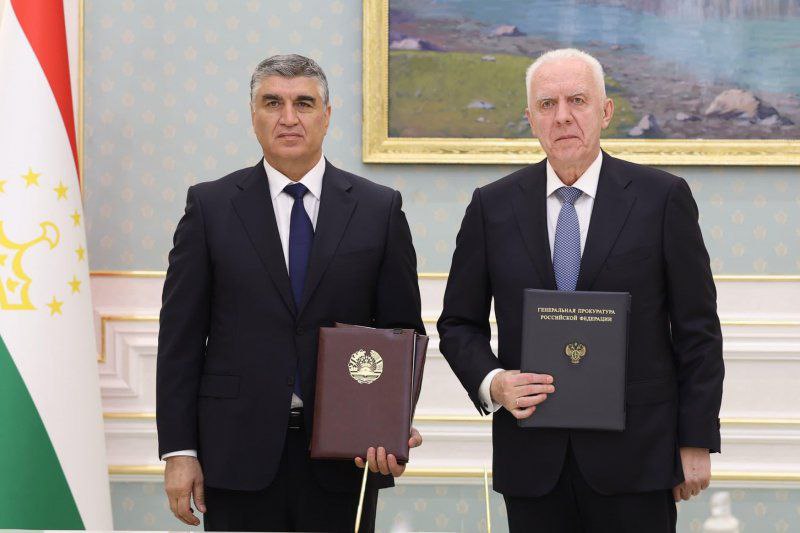
The Prosecutors General of Tajikistan and Russia, Habibullo Vohidzoda and Alexander Gutsan, have signed two major agreements in Dushanbe aimed at strengthening legal cooperation and ensuring the protection of labor migrants' rights.
The signing took place on October 20 on the sidelines of the 35th session of the Coordinating Council of Prosecutors General of CIS member states.
According to Tajikistan’s Prosecutor General’s Office, the new cooperation agreement expands bilateral efforts to combat crime and focuses particularly on issues related to labor migration.
The Russian Prosecutor-General’s Office highlighted that the agreement includes joint measures to counter illegal migration, terrorism, and extremism, while also emphasizing the protection of the rights and interests of Tajik migrant workers and their families.
The deal establishes a comprehensive legal framework to enhance the social and legal security of Tajik citizens working in Russia, where labor migration plays a vital economic and social role.
Key areas of cooperation
Under the new agreement, the two countries will collaborate in the following areas:
Migration and human rights:
· Protection of labor migrants and their families’ rights and freedoms;
· Combating illegal migration;
· Fighting human trafficking and illegal organ trade;
· Ensuring compliance with migration laws.
Transnational crime and security:
- Combating terrorism and extremism;
- Tackling illegal arms, explosives, and drug trafficking;
- Fighting corruption and money laundering;
- Addressing cybercrime and digital threats;
- Environmental protection and safeguarding the rights of minors.
Russian Prosecutor General Alexander Gutsan described the agreement as a significant step in reinforcing legal stability and strengthening strategic partnership and alliance between the two nations. He called the meeting a continuation of a long-standing, constructive dialogue aimed at combating transnational crime and modern security challenges.
In addition to the main agreement, the two sides also signed a separate cooperation deal between their military prosecution bodies.
These developments follow Russian President Vladimir Putin’s official visit to Dushanbe from October 8 to 10, during which multiple bilateral agreements were signed, including one mandating medical examinations for Tajik citizens before entering Russia for work.
The agreements come amid rising concerns over migrant treatment in Russia. Over the past two years, thousands of Tajiks have been deported, added to so-called "blacklists," and affected by increasingly strict migration laws. Incidents of violence, abuse, and discrimination against migrants—including women and minors—have been reported, affecting not only Tajik nationals but also citizens of other Central Asian countries.
 Руcский
