




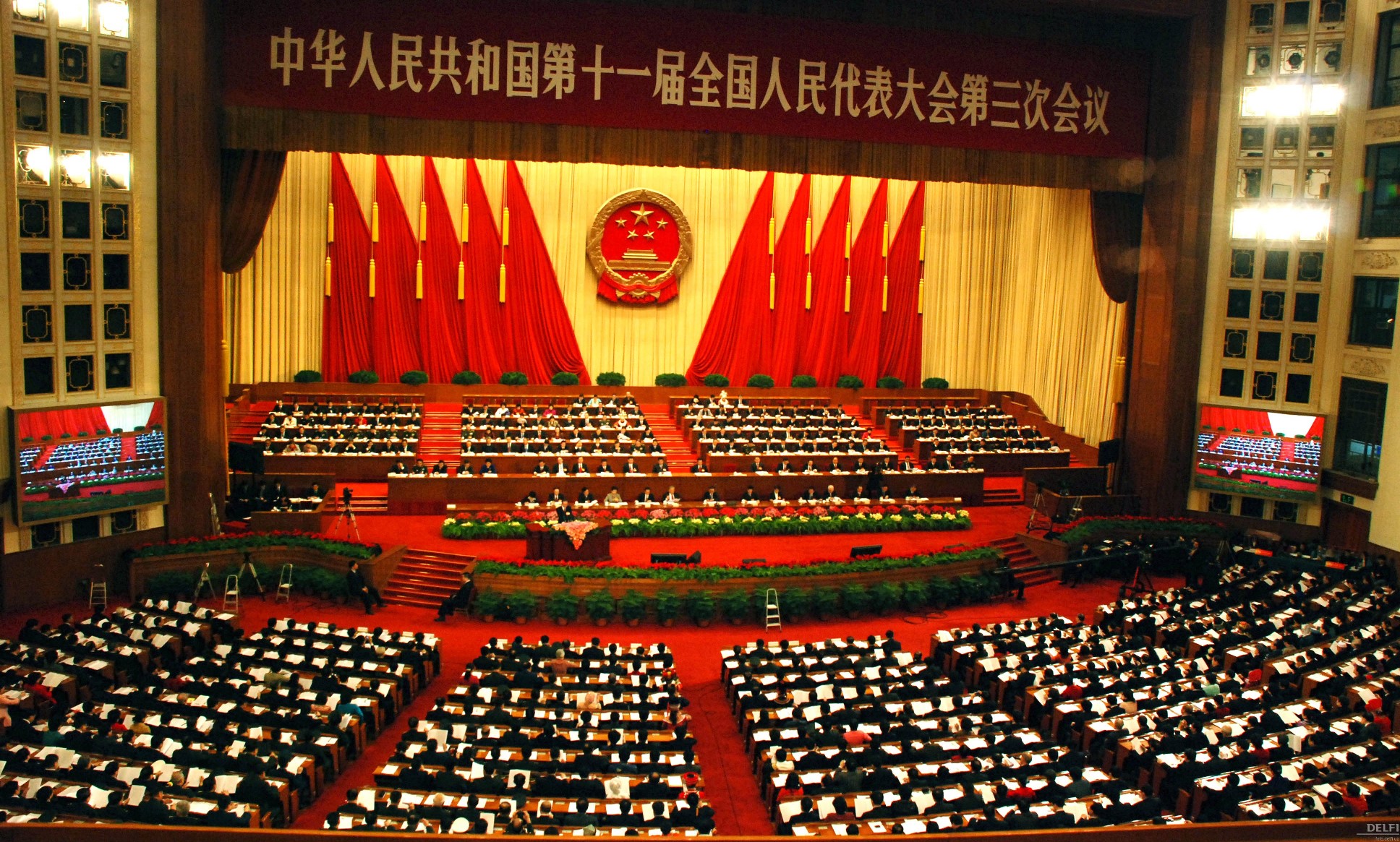
Chinese parliamentary delegation is expected to visit Tajikistan next week.
Muhammadato Sultonov, a spokesman for Tajikistan’s lower house (Majlisi Namoyandgon) of parliament says a high-level Chinese parliamentary delegation headed by Mr. Pan Yunhe, Chairman of the Foreign Affairs Committee of the Chinese People's Political Consultative Conference (CPPCC) will arrive in Dushanbe on May 15 on a three-day working visit.
The purpose of the visit is to further boost mutual cooperation and strengthen parliamentary linkages between the two countries.
Chinese lawmakers are scheduled to hold talks with high-ranking Tajik state officials to discuss state and prospects of further expansion of cooperation between Tajikistan and the People’s Republic of China.
They will also visit the Norak hydroelectric power plant (HPP) and the Yovon cement plant (Huaxin Gayur Cement Co., Ltd), Sultonov said.
Recall, Huaxin Gayur Cement Co., Ltd was introduced into operation in September 2013. Operated by Tajikistan-China joint venture, Huaxin Gayur Cement Co., Ltd, this coal-powered enterprise now produces two types of cement – M-400 and M-500. Huaxin Gayur Cement Co., Ltd was established by Huaxin Zhongya Investment (Wuhan) Co., Ltd, the subsidiary of Huaxin Cement Co., Ltd, and Gayur Limited Liability Company. Huaxin Zhongya Investment (Wuhan) Investment Co., Ltd assumes the 75% ownership interest and Gayur Limited Liability Company owns 25 percent of the shares in Huaxin Gayur Cement Co., Ltd.
The National People's Congress (usually abbreviated NPC) is the national legislature of the People's Republic of China. With 2,987 members it is the largest parliamentary body in the world. Under China's current Constitution, the NPC is structured as a unicameral legislature, with the power to legislate, the power to oversee the operations of the government, and the power to elect the major officers of state. The NPC and the National Committee of the People's Political Consultative Conference (CPPCC), a consultative body whose members represent various social groups, are the main deliberative bodies of China, and are often referred to as the Lianghui (Two Assemblies).


Tajikistan reportedly expands 4G network and improves mobile service quality
Uzbekistan and Afghanistan establish Business Council to boost bilateral trade to $5 billion
Tajikistan to allocate nearly 14 billion somoni for education in 2026
Tajik language in the US: a Tajik native teaching at the University of Kansas
Pakistan offers to host US-Iran talks
Emomali Rahmon attends Navrouz celebrations in Mastchoh district
Emomali Rahmon launches new preschool facility in northern Tajikistan
Central Asia gains strategic importance as oil crisis disrupts global markets
Russia to restrict Apple ID top-ups via mobile accounts
Entrepreneur in Sughd fined for violating the law on traditions and rituals
All news
Авторизуйтесь, пожалуйста