




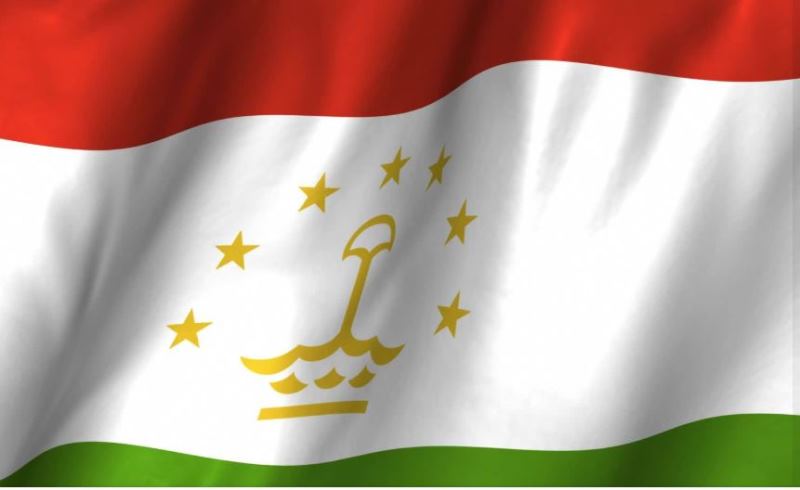
Tajikistan marks National Flag Day today with patriotic fervor and public celebrations in the capital, commemorating a symbol that has come to represent unity, heritage, and national identity since its official adoption in 1992.
In a message marking National Flag Day, the President of Tajikistan Emomali Rahmon extended congratulations to all citizens, emphasizing the flag’s role as a powerful emblem of national sovereignty, independence, and pride.
"The national flag is a symbol of any civilized nation's statehood, patriotism, national identity, and the unwavering will of its people," the message stated. It further highlighted the flag as a sign of unity, mutual understanding, and the collective struggle for freedom and independence.
The message noted that “Raising the national flag has always been directly tied to a sense of self-awareness and respect for national identity throughout history.”
The President reflected on Tajikistan’s deep-rooted tradition of flag-bearing, rooted in a civilization spanning thousands of years.
Referring to the ancient Kavyani banner—Dirafshi Kavyani—as a historic symbol of the Aryan statehood and unity of the Tajik people, the message underscored its special place in classical Persian literature. The banner, flown for centuries, represented the honor and dignity of the Aryan peoples.
The President paid tribute to the legendary poet Ferdowsi, who immortalized the aspirations of the people through the colors of the flag, using it as a guiding beacon for protecting peace, borders, history, and culture.
Today, the message continued, this rich tradition is proudly reflected in the tricolor of Tajikistan’s national flag—a vibrant continuation of the values carried through history. It serves as a call from the past, reminding every citizen that the flag is a symbol of independence—earned through the sacrifices and efforts of generations.
The official adoption of the national flag during the historic 16th session of the Supreme Council of Tajikistan in November 1992, held in the ancient city of Khujand, marked the foundation of a new era in Tajik statehood.
For the past 33 years, the people of Tajikistan have lived in peace and stability under this unifying national symbol, building a prosperous country through solidarity and collective effort. The flag, the message emphasized, has accompanied the nation's journey toward global recognition.
"Today, the State Flag of Tajikistan represents our free and democratic nation in all corners of the world," the President declared. It flies proudly at major international organizations, embassies, political and cultural events, as well as at international Olympiads and sports competitions.
The message drew attention to the pride felt whenever Tajik athletes step onto the world stage, not only representing themselves but the entire country. Each victory, marked by the raising of the national flag and the playing of the national anthem, strengthens the flag’s symbolic value and stirs national pride.
Such moments, the President emphasized, are vivid examples of patriotism and devotion to national values, igniting a deep sense of pride in the heart of every Tajik citizen.
The flag, he said, serves as a constant reminder of the importance of nation-building, hard work, self-awareness, and the protection of national achievements. It calls on citizens to remain committed to progress and unity.
"That is why," the message concluded, "it is essential that we all instill in our children a deep respect for the state flag as a sacred symbol of the homeland and our sovereign identity." Love and loyalty to the flag, he noted, reflect a sincere belief in the nation, its history, culture, and the enduring values of the ancient Tajik people.
The National Flag Day has been celebrated in Tajikistan annually since November 24, 2009, honoring the unveiling of Tajikistan’s current tricolor flag, which was introduced shortly after the country’s independence from the Soviet Union. The red, white, and green banner was officially adopted on November 24, 1992, making Tajikistan the last of the former Soviet republics to introduce a new national flag.
In a striking display on the first Flag Day in 2009, a 1,501-meter-long national flag was unfurled across Dushanbe’s central Roudaki Avenue—from the former Presidential Palace to Dousti Square. Crafted overnight in workshops across the city, the flag measured seven meters in width and symbolized the resilience and unity of the Tajik people. Alongside it, around 300 students carried a 90-meter version of the flag through the city’s streets to mark the occasion.
A landmark moment in the flag’s modern history came on May 24, 2011, when the national flag was hoisted atop a 165-meter flagpole in Dushanbe—then the tallest free-standing flagpole in the world. The massive flag, measuring 60 by 30 meters and covering 1,800 square meters, was installed by Trident Support Corporation, a San Diego-based company. The project reportedly cost $3.5 million and was part of a broader $210 million initiative celebrating the 20th anniversary of Tajikistan’s independence.
The design of the flag carries deep symbolism. The red stripe signifies national unity, victory, and the dawn; the white represents purity, morality, the snowy peaks, and the nation’s cotton heritage; while the green stands for nature’s abundance, fertile valleys, the Islamic faith, and the celebration of Navrouz. Alternative interpretations link the colors to different social groups: the red for manual laborers, white for intellectuals, and green for agricultural workers in rural regions.
The flag’s proportions further emphasize its symbolism. The white center stripe is one-and-a-half times wider than the red and green bands. Central to the white stripe is a golden crown flanked by seven stars, occupying 80% of the stripe’s height. The crown pays homage to the Samanid dynasty and the Persian root of the word “Tojik” (toj meaning “crown”). The seven stars hold particular cultural significance, symbolizing perfection, happiness, and the legendary seven mountains and seven orchards believed to exist in the heavens.
National Flag Day continues to be a powerful reminder of Tajikistan’s sovereignty, cultural richness, and enduring spirit.


GBAO and Khatlon province complete spring draft target early
Chronicle of the month: March, 2026
Donald Trump states US ready to end war with Iran without a Deal
Kyrgyzstan launches domestic production of national currency
Windy April: weather forecast for Tajikistan
Tajikistan faces continued religious freedom challenges
The Judo Grand Slam in Dushanbe: what to expect
New developments in Isfara: schools, power substation, and coal mine opened
Iran claims drone factory in Tajikistan, but no evidence surfaces
Nuclear raid or breaking the blockade: why Trump wants thousands of Marines and paratroopers off the shores of Iran
All news
Авторизуйтесь, пожалуйста