




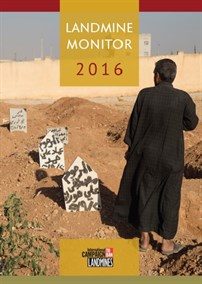
The number of casualties from landmines and similar explosives rose sharply last year to the highest level in a decade, the International Campaign To Ban Landmines (ICBL) said in a report released on November 22.
Every day an average of 18 people were killed or injured by mines or explosive remnants of war in 2015, marking a 75% increase from casualties recorded in 2014, according to the report.
The ICBL recorded 6,461 deaths or injuries from mines and unexploded bombs in 2015.
The report notes that the increase in casualties is yet another distressing reminder that landmines continue to cause significant harm to people around the world. The total number of survivors continue to increase.
While casualties have increased for the past two consecutive years, it is alarming to see that funding for mine action has been decreasing. The 2016 report shows a significant decline of $77 million in international support for mine action. Last year was the third year in a row of declining support and lowest level since 2005.
The report focuses on calendar year 2015, with information included up to November 2016 in some cases. It provides updates on Mine Ban Treaty status, landmine use, mine clearance, casualties and victim assistance.
The group blamed the sharp increase mainly on conflicts in Afghanistan, Iraq, Libya, Syria, Ukraine and Yemen.
The highest number of casualties was recorded in Afghanistan with 1,310 people killed or wounded.
Landmines have also been a serious problems for residents of some regions of Tajikistan as well. The mine-strewn areas are a legacy of the country’s disastrous civil war in the Nineties. Additional mines were laid along the Tajik-Uzbek border by the Uzbek authorities in the late 1990s. The action was reportedly taken to stave off incursions by the Islamic Movement of Uzbekistan (IMU). Not one Uzbek militant has been blown up by these mines, while casualties among the civilian Tajik population have increased. Most of the victims were women and children who were gathering firewood along the border as well as shepherds pasturing cattle in the areas.


GBAO and Khatlon province complete spring draft target early
Chronicle of the month: March, 2026
Donald Trump states US ready to end war with Iran without a Deal
Kyrgyzstan launches domestic production of national currency
Windy April: weather forecast for Tajikistan
Tajikistan faces continued religious freedom challenges
The Judo Grand Slam in Dushanbe: what to expect
New developments in Isfara: schools, power substation, and coal mine opened
Iran claims drone factory in Tajikistan, but no evidence surfaces
Nuclear raid or breaking the blockade: why Trump wants thousands of Marines and paratroopers off the shores of Iran
All news
Авторизуйтесь, пожалуйста