




DUSHANBE, May 5, 2013, Asia-Plus -- Tajik journalists and lawyers have come out for removing the public insult to the president from the Penal Code and place it under the bailiwick of administrative law.
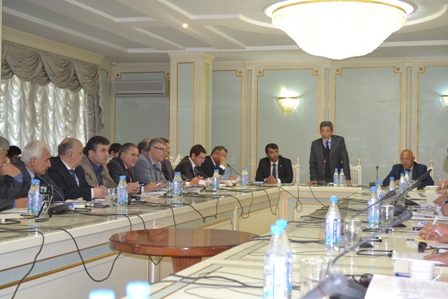
A republican conference to discuss state and prospects of freedom of media in Tajikistan took place in Dushanbe on May 3.
Organized by the Tajik Media Council and other media organizations of Tajikistan under support of the OSCE Office in Tajikistan on the occasion of World Press Freedom Day (WPFD), the conference discussed issues related to the ethics of journalism, legislative problem and lawsuits filed against media as well as problems of shift to digital broadcasting.
Speaking at the conference, journalists and lawyers proposed to remove insulting the president (Article 137) and insulting an official (Article 300) from the Penal Code and place them under the bailiwick of administrative law.
Mr. Junayd Ibodov, lawyer and expert on media legislation, in particular, noted that Article 300 (insulting an official) was the main “enemy” of independent media. “By using this article officials may bring journalists to trial,” said the lawyer. “Therefore, the situation has not changed after the law decriminalized libel.”
Article 300 stipulates that insulting an official is punishable by a fine equal to up to 1,500 minimum wages, or two to six months in jail or up to two years in correctional labor.
We will recall that the law decriminalizing libel took effect in July last year. The new legislation, proposed in March 2012 by President Emomali Rahmon, removes libel (Article 135) and insult (Article 136) from the Penal Code and places it under the bailiwick of administrative law. That means journalists accused of libel would face an administrative court rather than criminal prosecution.
Administrative courts could issue fines for a libel conviction but not a prison sentence. Meanwhile, distribution of obviously false information defaming a persons honor, dignity and reputation was punishable by up to two years in jail under Article 135, and insult, that is, the abasement of honor and dignity, expressed in an indecent way, was punishable by up to two years in correctional labor.
The new legislation does not alter a criminal law calling for up to five years in prison for those who libel or insult the president (Article 137).


GBAO and Khatlon province complete spring draft target early
Chronicle of the month: March, 2026
Donald Trump states US ready to end war with Iran without a Deal
Kyrgyzstan launches domestic production of national currency
Windy April: weather forecast for Tajikistan
Tajikistan faces continued religious freedom challenges
The Judo Grand Slam in Dushanbe: what to expect
New developments in Isfara: schools, power substation, and coal mine opened
Iran claims drone factory in Tajikistan, but no evidence surfaces
Nuclear raid or breaking the blockade: why Trump wants thousands of Marines and paratroopers off the shores of Iran
All news
Авторизуйтесь, пожалуйста