




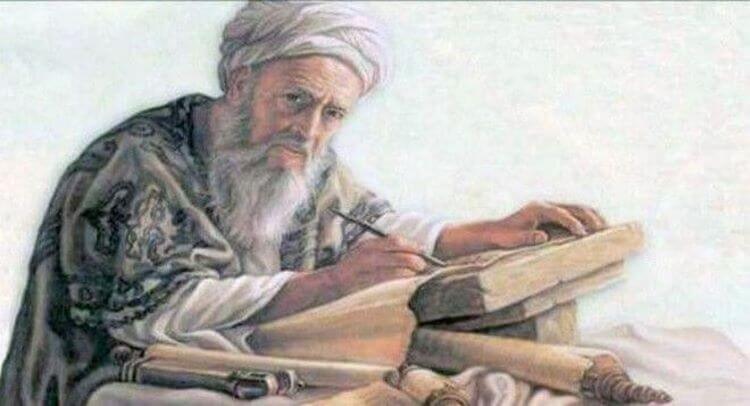
Two representatives of Tajik-Persian culture -- Persian polymath Abu Ali Sina and Iranian scholar and polymath Abu Rayḥan Muḥammad ibn Aḥmad Al-Biruni – are on the list of 30 smartest people in history, according to Adfave.
The list includes only the brilliant minds and scientists, whose works determine dour visions of the world, they authors say.
Ancient Chinese philosopher Lao-Tze tops the list.
Pythagore, Heraclit, Confucius, Parmenides, Democrit, Platonus, Aristotle, Ptolemy and Plotinus are also among the top tem smartest people in history.
Abu Rayḥan Muḥammad ibn Aḥmad Al-Biruni and Abu Ali Sina are ranked 11th and 12th, respectively.
Abu Rayḥan Muḥammad ibn Aḥmad Al-Biruni (973–1050), known as Al-Biruni, was an Iranian scholar and polymath. He was from Khwarezm — a region which encompasses modern-day western Uzbekistan, and northern Turkmenistan.
Al-Biruni is regarded as one of the greatest scholars of the medieval Islamic era and was well versed in physics, mathematics, astronomy, and natural sciences, and also distinguished himself as a historian, chronologist and linguist. He studied almost all fields of science and was compensated for his research and strenuous work. Royalty and powerful members of society sought out Al-Biruni to conduct research and study to uncover certain findings. He lived during the Islamic Golden Age, in which scholarly thought went hand in hand with the thinking and methodology of the Islamic religion. In addition to this type of influence, Al-Biruni was also influenced by other nations, such as the Greeks, who he took inspiration from when he turned to studies of philosophy. He was conversant in Khwarezmian, Persian, Arabic, Sanskrit, and also knew Greek, Hebrew and Syriac. In 1017 he traveled to South Asia and authored a study of Indian culture (Tahqiq ma li-l-hind...) after exploring the Hinduism practised in India.[a] He was given the title "founder of Indology". He was an impartial writer on customs and creeds of various nations, and was given the title al-Ustadh ("The Master") for his remarkable description of early 11th-century India. He also made contributions to Earth sciences, and is regarded as the “father of geodesy” for his important contributions to that field, along with his significant contributions to geography.
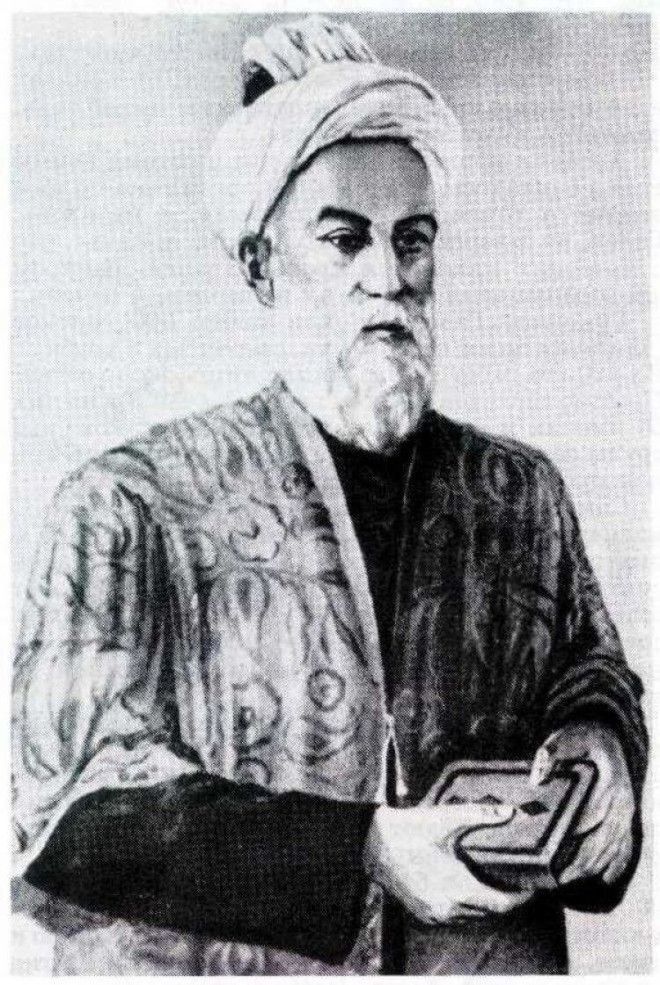
Abu Ali Sina ( c. 980 – June 1037), known as Ibn Sina and Avicenna, was a Persian polymath who is regarded as one of the most significant physicians, astronomers, thinkers and writers of the Islamic Golden Age. He has been described as the father of early modern medicine. Of the 450 works he is known to have written, around 240 have survived, including 150 on philosophy and 40 on medicine.
His most famous works are The Book of Healing, a philosophical and scientific encyclopedia, and The Canon of Medicine, a medical encyclopedia, which became a standard medical text at many medieval universities and remained in use as late as 1650. In 1973, Avicenna's Canon Of Medicine was reprinted in New York.
Besides philosophy and medicine, Avicenna's corpus includes writings on astronomy, alchemy, geography and geology, psychology, Islamic theology, logic, mathematics, physics, and works of poetry.


Ozoda Rahmon provides financial aid to mother of Tajik boy killed in school xenophobic attack in Russia
What awaits migrants in Russia in 2026: new rules and restrictions introduced
Multiple explosions rock Venezuelan capital Caracas
Two traffic police officers killed in avalanche in Varzob district
Muhsin Muhammadiyev passed away – a football icon and symbol of Tajik sport
Happy New Year, friends!
The horse spirit of Tajikistan: from ancient bloodlines to modern champions
International education in Central Asia: how UCA opens the door to a global career
EcoCars: how a company with Tajik roots became one of China’s first official EV exporters
Barqi Tojik promises uninterrupted power supply during New Year holidays
All news
Авторизуйтесь, пожалуйста