





Despite efforts to promote inclusion, people with hearing impairments in Tajikistan continue to face systemic challenges that hinder their access to rights, employment, and social services. Asia-Plus spoke with the National Association of the Deaf to better understand the daily struggles faced by this often-invisible community.
Challenge 1: lack of awareness about rights
The National Association of the Deaf of Tajikistan, active since the 1940s, currently has over 11,000 registered members — a figure that, according to the organization, vastly underrepresents the real number of people with hearing impairments in the country.
“Our outreach has spanned 38 cities and districts, but we still don’t have accurate data,” says Abdumanon Sharifov, the Association's director. “In remote areas, many people aren’t aware of our existence, and we don’t know where they live to reach them.”
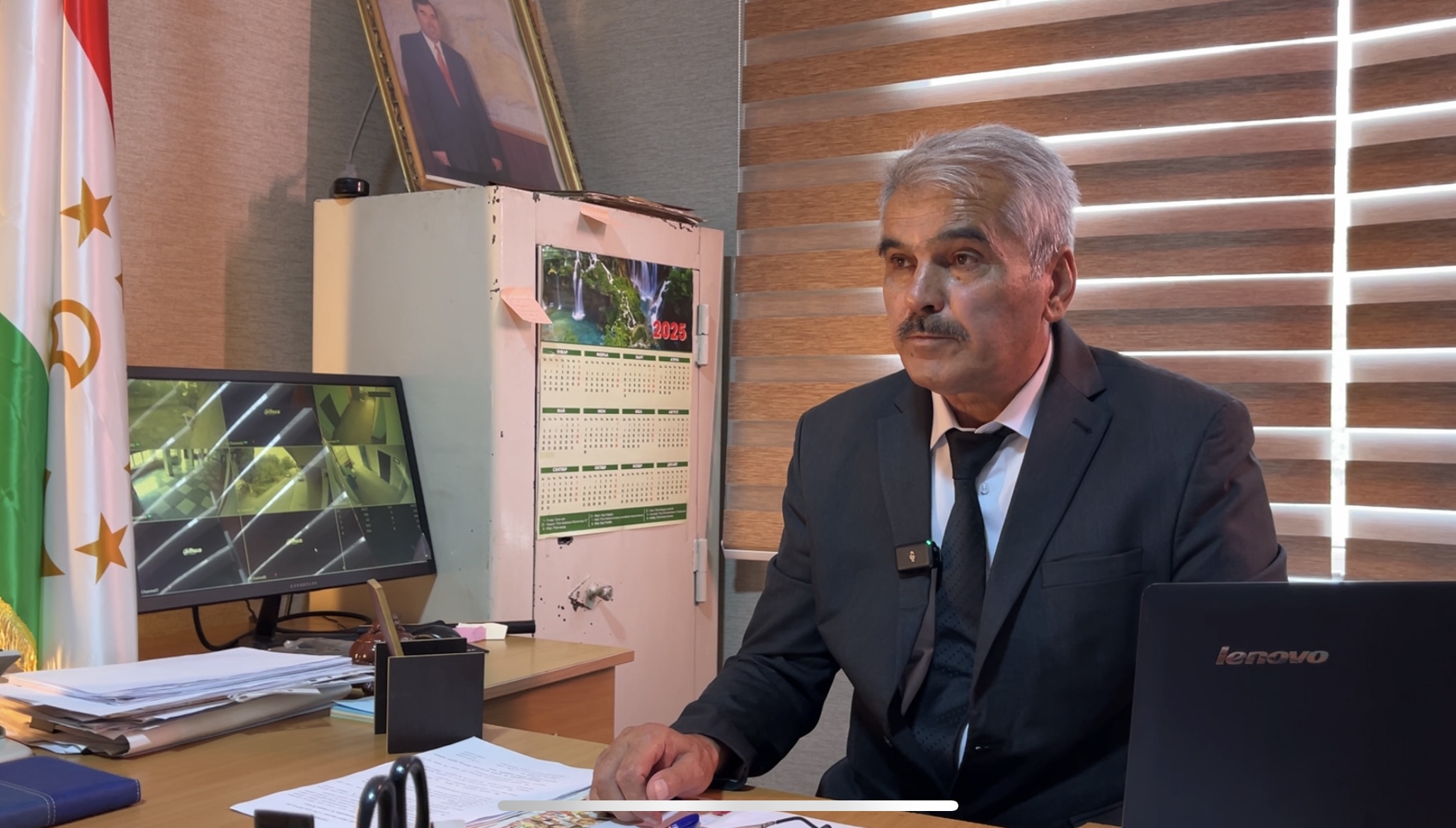
He adds that many hard-of-hearing individuals, particularly in rural areas, are unaware of their legal rights, don’t receive entitled pensions, and are often used as unpaid labor by family members.
While those over 17 are entitled to a “Deaf Identification Certificate,” few know it exists. The Association trains members in sign language and vocational skills and sends children to two special boarding schools in Roudaki district for education and job placement support.
A dormitory currently houses 30 people under the Association’s care.
Challenge 2: cancellation of tax benefits
Another major setback came in 2022 when tax exemptions — specifically VAT breaks — for the deaf and the organizations supporting them were completely abolished.
This followed a government decision to classify the hearing-impaired as “able-bodied,” thereby removing their eligibility for tax relief and reintroducing land taxes for related organizations.
Although individuals with hearing impairments fall under Category III disability, they receive lower pensions than those in Categories I or II. Sharifov has repeatedly requested the reclassification of deaf individuals to Category II, but his appeals have gone unanswered.

Challenge 3: skilled, but overlooked by employers
Despite many hard-of-hearing individuals in Tajikistan having vocational training, they still face widespread employment discrimination.
Sharifov notes a growing interest among deaf individuals in service-sector jobs rather than manual labor. Some have even begun working in passenger transport, including as taxi drivers.
“There are no safety risks for deaf drivers,” he explains. “Their vehicles are marked with signs indicating that the driver is hearing-impaired. We’ve reached out to taxi companies, hoping they will start hiring from our community, and we’re awaiting a response.”
Among the deaf community are also many creative talents. One example is Nilufar Pirova, an artist who dreams of opening her own studio.
However, high rental costs in Dushanbe have made this difficult. The Association has provided her a space where she now teaches young people how to draw.
“We need society to see the deaf differently,” says Zarrina Azimova, a sign language interpreter for the Association. “Every one of them has talent. Employers should consider their skills and capabilities when hiring.”
Challenge 4: declining orders threaten livelihoods
Even the Association itself is struggling financially due to a sharp drop in orders for its workshops, which are staffed by hearing-impaired workers.
These workshops produce plastic windows, bricks, quilts, pillows, and also process cotton. But demand has dwindled.
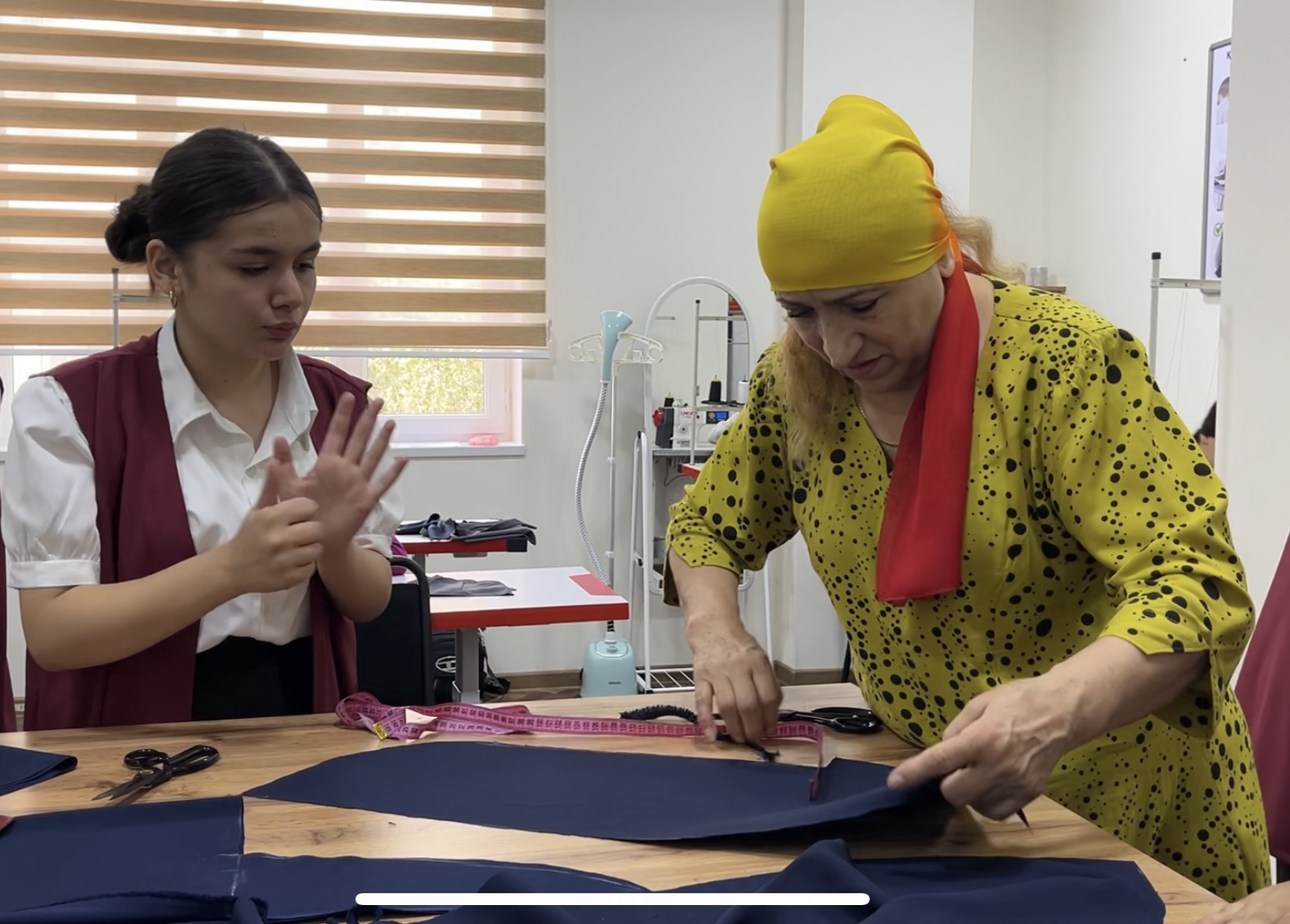
“Same products, same prices — but people prefer to shop in stores rather than buy directly from us,” laments Sharifov.
This decline in business affects not only the Association’s operations but also the economic stability of the deaf individuals it employs.
Challenge 5: critical shortage of sign language interpreters
Perhaps the most urgent issue is the severe lack of sign language interpreters in Tajikistan — a barrier that affects deaf people in nearly every aspect of life.
“Like anyone else, deaf individuals deal with legal disputes, land ownership issues, family problems. They go to hospitals, want to apply to universities — but face communication barriers at every turn,” says Sharifov. “They always need an interpreter, and there are almost none.”
He expressed concern that even national TV broadcasts lack sign language translation, including during presidential speeches.
“At the very least, there should be interpreters present during the president’s addresses,” he insists.
To address this, the Association runs sign language courses for parents of hearing-impaired children, teachers, bank staff, and medical professionals in various regions, including Sughd, Khatlon, and Dushanbe.
While there has been progress, interpreter shortages remain a serious problem.
Call for action: ratify the Disability Rights Convention
Sharifov believes that one of the most effective ways to protect the rights of the hearing-impaired in Tajikistan is through ratifying the UN Convention on the Rights of Persons with Disabilities.
If adopted, it could:
- Enable more deaf individuals to be employed in universities and hospitals
- Increase the number of certified interpreters, with proper employment oversight
- Improve working and learning conditions, with infrastructure adapted to their needs
“We’re not asking for money,” Sharifov emphasizes. “We just want the rights of deaf people to be upheld, public attitudes to change, and the long-promised ratification of the Disability Rights Convention — expected back in 2024 — to finally happen. We want the return of essential benefits.”
 Руcский
