




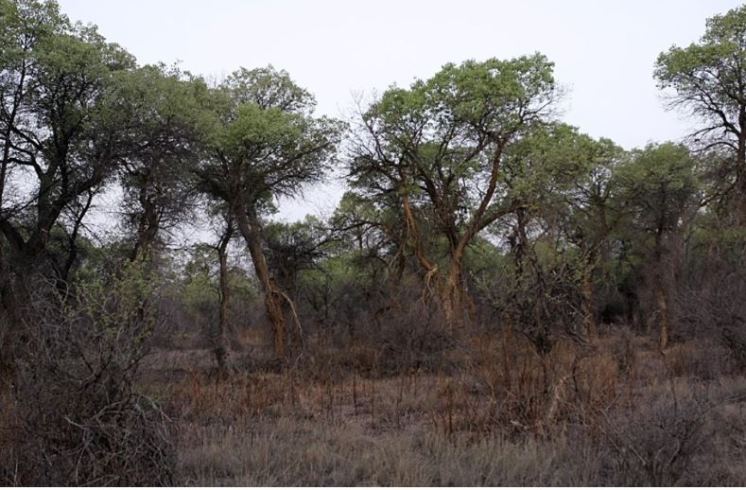
The conservation outlook for Tajikistan’s Tigrovaya Balka Nature Reserve has been assessed as “of concern” in the latest evaluation by the International Union for Conservation of Nature (IUCN), raising alarms about the site’s long-term ecological stability.
Despite gaining UNESCO World Heritage status in 2023—which brought global attention and funding to the reserve—Tigrovaya Balka continues to face serious environmental and management challenges. The status has led to greater awareness and some financial support to address ecological issues in southern Tajikistan. However, the IUCN notes that fundamental problems persist.
Key concerns include inadequate management capacity, insufficient funding, a lack of scientific monitoring, and weak coordination at the landscape level by the governing authorities. The reserve is also under pressure from expanding private agriculture in its buffer zones, which is contributing little to local communities while straining regional water resources.
This agricultural development is especially troubling in a region where farming is the largest consumer of water—a threat to the tugay forests, a rare and delicate riparian ecosystem. These forests rely heavily on consistent hydrological conditions, which are increasingly disrupted by upstream damming and irrigation practices.
Although dams on the upper Vaksh River have significantly altered water flow over the past 60 years, they remain essential to Tajikistan’s economic and energy infrastructure. The IUCN suggests that hydrological research and modeling are needed to assess the long-term survival of the tugay ecosystem, particularly as climate change and agricultural expansion accelerate.
The current extent of tugay forest cover is unlikely to be sustained without robust water management strategies. Experts say restoring a favorable water regime will require cross-sectoral coordination, especially within agriculture, along with research, environmental flow planning, and regional collaboration.
While the UNESCO World Heritage Committee confirmed the site's Outstanding Universal Value (OUV) was intact at the time of inscription in 2023, experts caution that its ecological health remains fragile. Comparisons are often made to pre-1960s conditions, before the construction of the Nurek Dam and the environmental degradation that occurred during Tajikistan’s civil war in the 1990s.
Tigrovaya Balka lies between the Vakhsh and Panj rivers in southwestern Tajikistan. It encompasses extensive tugay forests, the Qashqa-Qum desert, the Buritau peak, and the Khoja-Qoziyoin mountains. These landscapes form a complex system of floodplain terraces and alluvial soils that support highly specialized biodiversity. The reserve is home to the largest and most intact Asiatic poplar tugay forest in Central Asia—making it globally unique.


Ozoda Rahmon provides financial aid to mother of Tajik boy killed in school xenophobic attack in Russia
What awaits migrants in Russia in 2026: new rules and restrictions introduced
Multiple explosions rock Venezuelan capital Caracas
Two traffic police officers killed in avalanche in Varzob district
Muhsin Muhammadiyev passed away – a football icon and symbol of Tajik sport
Happy New Year, friends!
The horse spirit of Tajikistan: from ancient bloodlines to modern champions
International education in Central Asia: how UCA opens the door to a global career
EcoCars: how a company with Tajik roots became one of China’s first official EV exporters
Barqi Tojik promises uninterrupted power supply during New Year holidays
All news
Авторизуйтесь, пожалуйста