




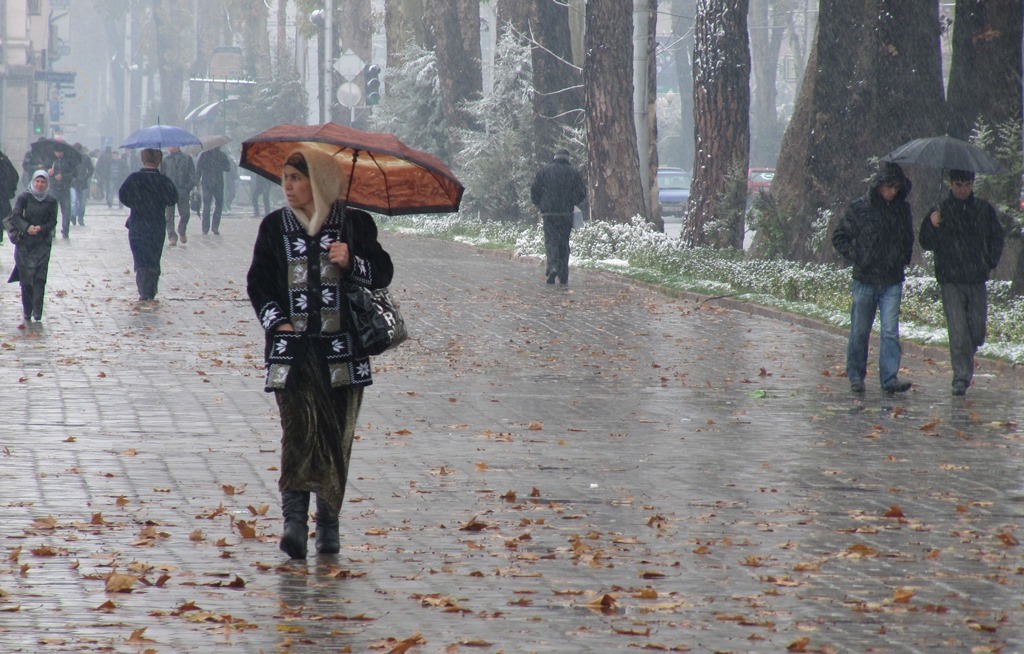
Winter 2025–2026 in Tajikistan is expected to be warmer than usual, according to a seasonal forecast provided to Asia-Plus by the national Hydrometeorology Center (Hydromet).
Forecasters report that temperatures in lowland regions — including Khatlon province and districts subordinate to the center — will be 1°C–2°C above the climatic norm. Mountain areas are expected to face colder conditions, approximately 1°C below normal, while in high-altitude zones temperatures may drop as low as –23°C, particularly in the Bulunkul area, Murgab district of the Gorno-Badakhshan Autonomous Region (GBAO).
Temperature outlook
December 2025:
· Valleys and foothills: –1 to +5°C (within normal range),
· Mountain regions: 1°C below normal, –1 to –7°C,
· High-altitude areas: –14 to –16°C.
In January and February 2026, temperatures across most regions will remain close to normal. In lowland areas, slight warming of 1°C–2°C above the norm is possible. Mountain regions, particularly in February, may experience:
· Mountain zones: –1 to –6°C,
· High-altitude areas: down to –20°C.
Precipitation forecast
Overall winter precipitation will remain near the climatic norm, though increases are expected in mountainous and foothill regions.
December 2025:
· valleys: 39–75 mm (locally 9–28 mm),
· foothills: 34–102 mm,
· mountain regions: 39–99 mm,
· high-altitude areas: 2–6 mm.
January 2026 is expected to follow a similar pattern: normal precipitation in lowlands and above-normal levels in the mountains.
February 2026:
· valleys: 38–101 mm,
· foothills: 37–130 mm,
· mountains: 37–101 mm,
· high-altitude zones: 8–10 mm.
Some days may see fog and strong westerly winds reaching 17–22 m/s.
Atmospheric conditions: influence of western flows
Meteorologists note that western and southwestern air currents will dominate during the winter period, bringing milder conditions to the lowlands. Mountain regions, however, will be affected by colder air masses, resulting in below-normal temperatures.
Summary: what to expect
According to Hydromet:
· Lowland areas will see a warmer-than-usual winter.
· Mountain and high-altitude regions will experience colder-than-normal conditions.
· Precipitation will remain near normal, with increases in mountainous and foothill zones and slight deficits in the valleys.
 Руcский
