




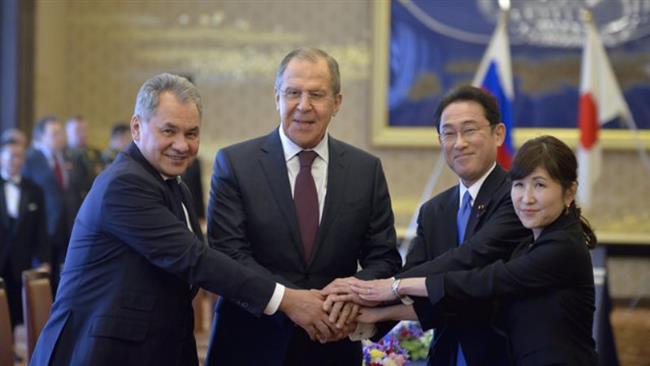
Japan and Russia agreed on March 20 to closely cooperate on efforts to curb North Korea’s nuclear provocations, holding their first ministerial talks on foreign policy and security since Moscow annexed Crimea in 2014, according to The Japan Times.
In the so-called two-plus-two dialogue, Foreign Minister Fumio Kishida and Defense Minister Tomomi Inada met with Russian counterparts Sergei Lavrov and Sergei Shoigu.
The meeting reportedly marks an improvement in bilateral ties that have been long complicated by a territorial dispute over four Russian-controlled islets off Hokkaido.
The talks precede Prime Minister Shinzo Abe’s visit to Russia next month and, according to Kishida, are expected to “speed up” progress on the wartime row, which has prevented the two countries from signing a peace treaty to officially end World War II.
On North Korea, “we had a very candid talk on the missile launches by the North and we agreed to call on the country to refrain from further provocations and comply with the U.N. Security Council resolution,” Kishida said.
The two sides also confirmed that Abe will visit Russia in late April, he said.
The resumption of the dialogue was reportedly proposed by Russia during the Abe-Putin summit in December.
The two-plus-two meeting made Japan the first country to engage Russia in talks since Russia commandeered the Crimean Peninsula.
“I believe this two-plus-two format will be instrumental in helping a Russia-Japan relationship take on a new nature and making it more friendly,” Russian Foreign Minister Lavrov said in a joint conference after the dialogue.
Kishida, too, expressed confidence that a high-level talk of this ilk will help foster rapport between the two nations and go a long way toward the conclusion of a peace treaty.
“High-level political conversations between us were never so active as they have been in recent years,” he said.
The Indian Express reports that Japan and Russia last held “two-plus-two” talks in November 2013. Meetings were shelved after that due to the crisis in Ukraine, as Japan joined sanctions against Moscow.
The Tokyo talks are not expected to lead to a breakthrough on conflicting claims to islands north of Hokkaido Etorofu, Kunashiri, Shikotan and the Habomai islets that came under Russian control after Japan’s defeat in World War II.


GBAO and Khatlon province complete spring draft target early
Chronicle of the month: March, 2026
Donald Trump states US ready to end war with Iran without a Deal
Kyrgyzstan launches domestic production of national currency
Windy April: weather forecast for Tajikistan
Tajikistan faces continued religious freedom challenges
The Judo Grand Slam in Dushanbe: what to expect
New developments in Isfara: schools, power substation, and coal mine opened
Iran claims drone factory in Tajikistan, but no evidence surfaces
Nuclear raid or breaking the blockade: why Trump wants thousands of Marines and paratroopers off the shores of Iran
All news
Авторизуйтесь, пожалуйста