




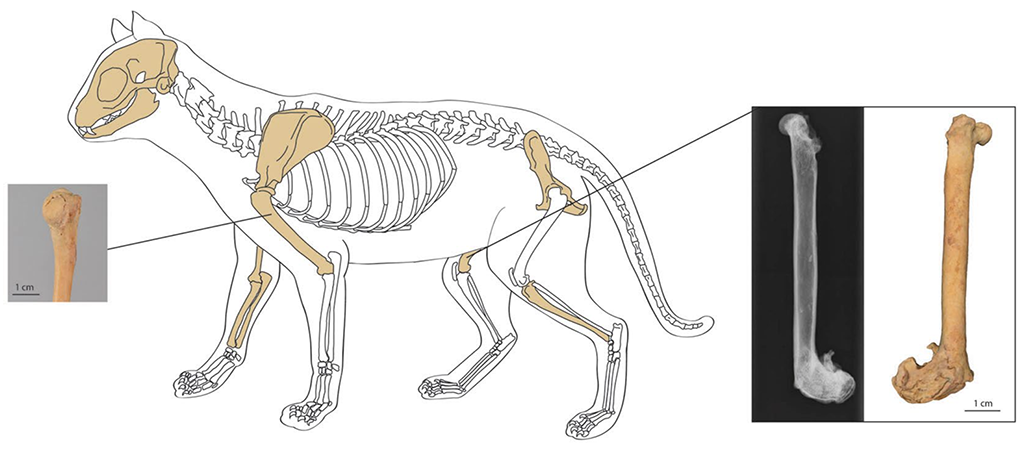
A house cat dead for more than 1,000 years is changing our understanding of urbanization and trade along the early Silk Road, according to Eurasianet.
Archaeologists found the cat’s skeleton in Dzankent, a medieval city east of the Aral Sea in present-day Kazakhstan.
Radiocarbon dating suggests the remains were buried between the years 775 and 940, as much as a millennium before domestic cats were previously thought introduced to the region.
The remote area was populated at the time by the Oghuz, a people with nomadic roots. How they cared for the cat shows the Oghuz were a “cosmopolitan population which harbored a diversity of worldviews on animals” earlier than previously thought, write Ashleigh Haruda of Martin Luther University Halle-Wittenberg and her colleagues this month in Nature.
DNA suggests the cat's ancestors were not local, but hailed from settled cultures in the Middle East. That implies that the people of Dzankent had, despite their isolation, established trade and commercial ties, most likely with Persia “where pet keeping and feline anthropomorphization were widespread practices by the arrival of Islam in the eighth century.”
To demonstrate the cat was a pet, Haruda and her colleagues examine the way its bones set after three accidents. These traumas would have been life-threatening in the wild, limiting “the mobility of this animal prior to its death, hindering its ability to capture prey, flee to shelter, and to fight,” they write. And yet its teeth indicate it was fed a healthy diet until the end of its life.
This was not a cat employed merely to eradicate pests, but a beloved friend – “not only the earliest known domestic cat on the Silk Road, but also evidence of the complex interface between nomadic and urban cultural worldviews in a rapidly globalizing world.”


GBAO and Khatlon province complete spring draft target early
Chronicle of the month: March, 2026
Donald Trump states US ready to end war with Iran without a Deal
Kyrgyzstan launches domestic production of national currency
Windy April: weather forecast for Tajikistan
Tajikistan faces continued religious freedom challenges
The Judo Grand Slam in Dushanbe: what to expect
New developments in Isfara: schools, power substation, and coal mine opened
Iran claims drone factory in Tajikistan, but no evidence surfaces
Nuclear raid or breaking the blockade: why Trump wants thousands of Marines and paratroopers off the shores of Iran
All news
Авторизуйтесь, пожалуйста