




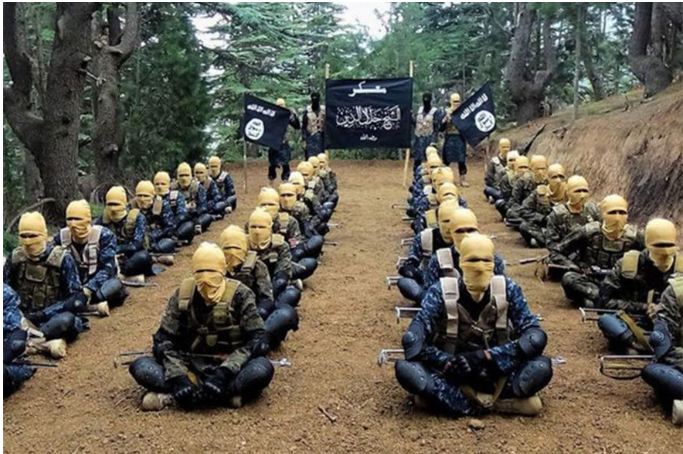
Just The News reported on April 19 that according to defense and counterterrorism experts, al Qaeda and Islamic State’s Afghan branch, Wilayat Khorasan (IS-K), are flourishing in Afghanistan, again turning into a “safe haven” for terrorists who are increasingly posing a threat against the United States.
“The terrorist threat environment in Afghanistan has deteriorated dramatically since August 2021 – and it is getting worse,” Nathan Sales, a former State Department counterterrorism coordinator, made a statement at a House Homeland Security Subcommittee on Counterterrorism hearing on April 18, according to Just The News.
He reportedly further elaborated that due to the various groups and the lack of capability to fight terrorism on the one hand and the absence of US pressure, Afghanistan has become a breeding ground for growing terrorism.
“Due to a combination of Taliban-provided safe haven, the Taliban’s lack of counterterrorism capability, and the absence of sustained counterterrorism pressure from the United States, Afghanistan has become hospitable terrain for various terrorist groups,” he added.
Sales also raised concerns about a "significant risk that state-of-the-art American military equipment could fall into terrorists’ hands" after the U.S. left behind nearly $7.2 billion worth of equipment when leaving the country in August 2021.
Dr. Jonathan Schroden, a top official at the federally-funded nonprofit research group the Center for Naval Analyses, said at the hearing: "There is no question that [al Qaeda] and the Islamic State retain the intent to attack the US homeland."
IS-K is active in South Asia and Central Asia. IS-K has been active in Afghanistan and its area of operations includes Pakistan, Tajikistan and India where they claimed attacks, as well as Sri Lanka, the Maldives, Bangladesh and China where individuals have pledged allegiance to it. The IS-K and Taliban consider each other enemies.
The group was created in January 2015 by disaffected Taliban in eastern Afghanistan, although its membership includes individuals from various countries notably Pakistan, Bangladesh, India and Myanmar. Its initial leaders, Hafiz Saeed Khan and Abdul Rauf Aliza, were killed by US forces in July 2016 and February 2015, respectively. Subsequent leaders have also been killed; its leader Abdullah Orokzai was captured in April 2020 by Afghanistan's intelligence service.


GBAO and Khatlon province complete spring draft target early
Chronicle of the month: March, 2026
Donald Trump states US ready to end war with Iran without a Deal
Kyrgyzstan launches domestic production of national currency
Windy April: weather forecast for Tajikistan
Tajikistan faces continued religious freedom challenges
The Judo Grand Slam in Dushanbe: what to expect
New developments in Isfara: schools, power substation, and coal mine opened
Iran claims drone factory in Tajikistan, but no evidence surfaces
Nuclear raid or breaking the blockade: why Trump wants thousands of Marines and paratroopers off the shores of Iran
All news
Авторизуйтесь, пожалуйста