





Russia has officially recognized the Taliban government as the legitimate authority in Afghanistan, making it the first country in the world to do so. On July 3, the Russian Foreign Ministry confirmed the decision, and the flag of the "Islamic Emirate of Afghanistan" — the name used by the Taliban — was raised over the Afghan Embassy in Moscow.
Until now, no nation had formally acknowledged the Taliban regime, which took control of Afghanistan in 2021 following the withdrawal of U.S. and NATO forces. The Kremlin’s move marks a major shift in regional geopolitics.
Political analyst Farid Muttaqi, based in Germany, shared his insights with Asia-Plus on the motives and consequences of Moscow’s decision.
Historical overview of Russian-Taliban relations before 2021
In the years preceding the Taliban's return to power in Afghanistan in 2021, Russia’s approach toward the group was characterized by a complex blend of cautious engagement, strategic negotiation, and pragmatic containment. Historically, Russia’s policies toward the Taliban have been influenced by regional security concerns, counter-terrorism objectives, and its broader geopolitical interests in Central Asia.
Following the fall of the Taliban regime in 2001, Russia’s primary objective was to prevent the resurgence of militant groups that could threaten its own security and destabilize the Central Asian republics. Russia was initially skeptical of the post-2001 Afghan government, perceiving it as dominated by Western interests, yet remained deeply concerned about the continued insurgency and the presence of extremist groups, including the Taliban.
Despite its opposition to the Taliban during the 1990s, Russia maintained a pragmatic stance, engaging in back-channel negotiations with the group. Moscow sought to leverage its influence to facilitate the peace process and prevent Afghanistan from becoming a safe haven for terrorist organizations. Over the years, Russia hosted several meetings with Taliban representatives, aiming to establish dialogue channels and influence Taliban policies.
By 2018, Russia’s policy toward the Taliban appeared to shift from outright opposition to more nuanced engagement. Moscow hosted the first official talks with Taliban representatives in March 2019, signaling recognition that the group remained a key stakeholder in Afghanistan’s future. These meetings aimed to foster a political settlement and reduce violence, although Russia remained cautious about fully recognizing the Taliban as a legitimate government.
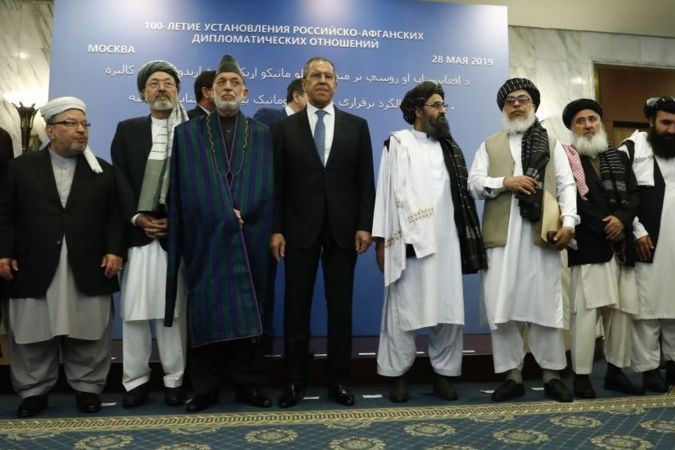
Throughout this period, Russia’s strategy also involved strengthening its influence with the Afghan government and regional actors like China and Pakistan, often emphasizing the importance of an Afghan-led peace process. Moscow’s military and diplomatic efforts reflected a desire to balance containment with engagement, avoiding outright confrontation while seeking to influence the Taliban’s future role.
The culmination of this approach was Russia’s active participation in the Quadrilateral Coordination Group (QCG) alongside the US, China, and Pakistan, which aimed to facilitate dialogue and promote stability in Afghanistan. Despite the limited official recognition of the Taliban, these efforts signaled Moscow’s pragmatic acknowledgment of the group’s significance in Afghan conflict resolution.
Russia’s strategic approach to the Taliban
Russia’s engagement with the Taliban, deepening since 2019, culminated in formal recognition on July 4, 2025, marking a major pivot in its Afghan policy. Driven by security concerns in Central Asia and the desire to prevent extremist spillover, Moscow views the Taliban as essential actors in shaping Afghanistan’s future.
This pragmatic approach aims to contain threats like ISIS-K while positioning Russia as a key regional power broker following the U.S. withdrawal. Recognition may encourage countries like China, Iran, and Pakistan to follow suit, undermining Western efforts to isolate the Taliban. For Central Asia, it presents both strategic opportunities and serious risks, as Moscow seeks to influence Afghanistan’s political order while safeguarding regional stability.
Russia’s recent recognition of the Taliban carries implications that may extend far beyond Afghanistan’s borders, potentially destabilizing the broader regional and international order. At the heart of the issue lies a growing geopolitical rift: as Russia seeks to assert its influence in Central and South Asia, this move could deepen the divide between Moscow and the West. One likely consequence is the further estrangement of Afghanistan from Western institutions and aid mechanisms, cutting off critical humanitarian and developmental support at a time when the country remains deeply vulnerable.
This shift raises a critical question: can Russia, acting largely alone or in coordination with a narrow group of regional actors, offer the kind of stability and economic backing that Afghanistan requires under Taliban rule? Or will this recognition simply accelerate the country’s slide into long-term international isolation?
Equally pressing is whether the Taliban, emboldened by growing acceptance from some global powers, will be compelled, or even inclined, to meet basic international norms. These include commitments to human rights, inclusive governance, and, most critically, access to education for women and girls. To date, the Taliban’s record offers little reason for optimism.
Thus, the recognition of the Taliban by Russia may set in motion a new era of geopolitical fragmentation, where Afghanistan becomes a pawn in a broader contest between great powers. The burden of this rivalry, however, will be borne most heavily by the Afghan people.
Political, security, and economic consequences of Taliban recognition by Russia
The Taliban’s return to power presents Russia with complex political, security, and economic challenges. Politically, it forces Moscow to recalibrate its regional strategy – balancing engagement with the Taliban against the need to protect its interests and maintain stable relations with Central Asian allies. The Taliban’s governance could embolden ideological movements across the region while complicating Russia’s diplomatic ties with the West.
Security concerns are paramount. A Taliban-controlled Afghanistan may become a haven for extremist groups, threatening Russia’s southern borders through terrorism, radicalization, and drug trafficking. In response, Moscow has reinforced its military posture in Central Asia. However, recognition of the Taliban could trigger renewed proxy conflicts, as rival powers potentially back anti-Taliban forces, echoing the dynamics of the 1980s.
Economically, instability in Afghanistan undermines regional connectivity and threatens major infrastructure projects, including those linked to China’s Belt and Road Initiative. The growing insecurity raises operational costs for Russia, from border control to intelligence operations — and further complicates its economic ambitions in Central Asia.
In sum, while Russia hopes to shape stability through engagement with the Taliban, it risks entanglement in a fragile and volatile landscape that could undercut its long-term regional influence.
Russia and the Taliban’s return: a strategic dilemma
The Taliban’s return to power presents Russia with a complex mix of opportunities and risks. Politically, it challenges Moscow to engage the group without undermining ties with Central Asian allies or provoking Western backlash. Security-wise, a Taliban-led Afghanistan heightens fears of terrorism, radicalization, and drug trafficking spilling into Russia’s southern borders, prompting increased military vigilance.
Economically, the instability threatens regional trade and infrastructure projects, raising costs and uncertainty for Russia’s strategic ambitions. While Moscow frames its recognition of the Taliban as a move toward stability, it may inadvertently spark new proxy conflicts and deepen regional fragmentation, echoing the turmoil of the 1980s.
Who might recognize the Taliban next?
Following Russia’s lead, several countries are reassessing their stance toward the Taliban. China appears most likely to deepen engagement, driven by economic interests tied to Afghanistan’s mineral wealth and the Belt and Road Initiative, as well as security concerns over Uyghur extremism near its western border.
Gulf states like Saudi Arabia and the UAE may also move toward pragmatic engagement to ensure regional stability and protect investments. However, Western nations remain hesitant, opting for limited diplomatic or humanitarian contact unless the Taliban shows clear progress on governance and human rights.
Conclusion
The complex history of Russia’s engagement with the Taliban, marked by cautious diplomacy and strategic containment, underscores the evolving nature of regional security dynamics in Central Asia. While Russia’s approach has balanced between containment and pragmatic engagement, the future recognition and influence of the Taliban will depend heavily on regional and global geopolitical shifts.
As China and Pakistan potentially follow Russia’s lead, the regional balance of power could shift significantly, impacting stability, security, and development in Afghanistan and beyond. Maintaining a nuanced understanding of these dynamics is essential for shaping effective policy responses that promote regional stability, counter extremism, and uphold international norms.
About the author:
Dr. Farid Muttaqi is a political analyst with a PhD in political economy from the University of Bremen, specializing in foreign policy analysis. He has experience in human rights, documenting war crimes and advocating for humanitarian law in Afghanistan. He currently collaborates with various academic institutions in Europe and Central Asia.
 Руcский
