




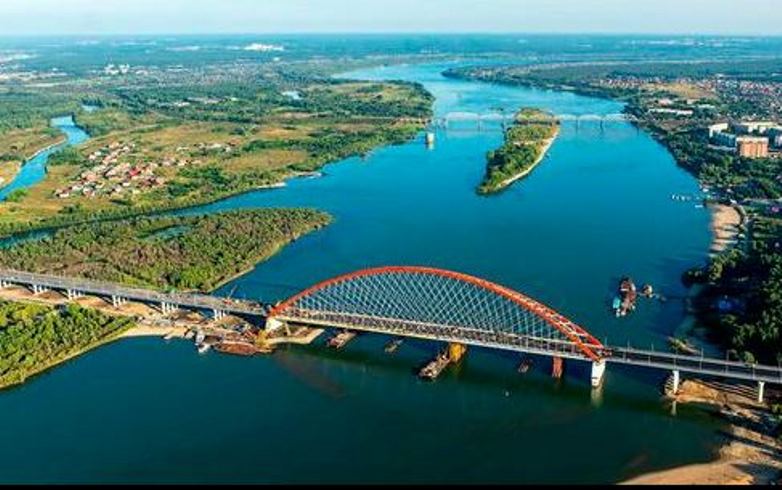
The Russian Academy of Sciences is reportedly seeking Kremlin funding to conduct a feasibility study for a massive infrastructure project that would divert water from the Ob River in Siberia to the water-stressed countries of Central Asia — a controversial concept dating back to Soviet times.
According to a report by RBC, the modern version of the plan would involve laying more than 2,000 kilometers of plastic piping across rugged terrain — a marked departure from the open canal concept proposed in the 1970s. The Soviet project was shelved during the Perestroika era amid mounting concerns about environmental damage and rising costs.
The current estimated price tag: $100 billion. Construction would take at least a decade. If realized, the project could transfer up to 22 cubic kilometers of water annually to Central Asian countries suffering from chronic water shortages.
A feasibility study — should the Kremlin approve funding — would assess the technical complexity and potential consequences of such a megaproject, including its “climatic effects, impacts on aquatic and terrestrial ecosystems, and implications for the long-term socio-economic development of participating countries,” Forbes.ru reported.
Who benefits — and why now?
The renewed push raises a central question: What’s in it for Russia?
Although the Kremlin has yet to publicly endorse the plan, some observers suggest Moscow could be weighing whether to leverage water as a strategic resource — either as a commercial export commodity akin to oil and gas, or as a tool of geopolitical influence over its southern neighbors. No financing details or formal commitments from Central Asian nations have been reported so far.
Speaking to Forbes.ru, prominent Russian scientist Robert Nigmatulin said the pipeline project could help address Central Asia’s worsening water crisis. Yet there’s little clarity on whether regional governments have been consulted, or whether they support the initiative in principle.
Parallel water projects for Russia
In addition to the Ob River diversion, the Russian Academy of Sciences is reportedly considering a separate study to divert water from the Pechora and Northern Dvina rivers to drought-hit regions in southern Russia via the Volga River basin. Several areas — including Kalmykia, Krasnodar Krai, and the Astrakhan, Orenburg, and Rostov regions — are facing severe water stress.
With Russia itself grappling with growing water management challenges, some experts question whether exporting Siberian water to Central Asia is politically or economically viable — or whether it could provoke ecological backlash and diplomatic resistance.
For now, the project remains theoretical. But its revival signals a broader shift in how Russia views water: not just as a domestic necessity, but potentially as a powerful asset on the geopolitical chessboard.


GBAO and Khatlon province complete spring draft target early
Chronicle of the month: March, 2026
Donald Trump states US ready to end war with Iran without a Deal
Kyrgyzstan launches domestic production of national currency
Windy April: weather forecast for Tajikistan
Tajikistan faces continued religious freedom challenges
The Judo Grand Slam in Dushanbe: what to expect
New developments in Isfara: schools, power substation, and coal mine opened
Iran claims drone factory in Tajikistan, but no evidence surfaces
Nuclear raid or breaking the blockade: why Trump wants thousands of Marines and paratroopers off the shores of Iran
All news
Авторизуйтесь, пожалуйста