




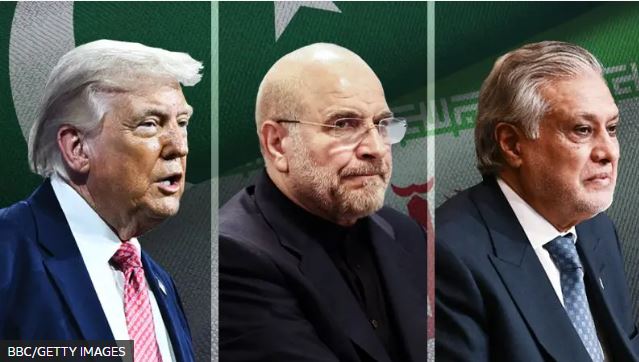
A meeting of the foreign ministers of Pakistan, Saudi Arabia, Turkiye, and Egypt was held in Islamabad to discuss the situation in the Middle East. Following the talks, Pakistan reaffirmed its readiness to serve as a venue for potential negotiations between the United States and Iran, which could take place “in the coming days,” the BBC’s Russian Service reported on March 30.
Foreign ministers of Pakistan, Saudi Arabia, Turkiye, and Egypt gathered in Islamabad over the weekend to discuss the situation in the Middle East.
Following the first day of the meeting, Pakistan’s Deputy Prime Minister and Foreign Minister Ishaq Dar stated that his country is ready to host talks between Iran and the United States “in the coming days.”
“It would be an honor for Pakistan to serve as a venue and mediator for meaningful negotiations between the two sides in order to achieve a comprehensive and long-term resolution of the conflict,” Dar said, according to the NNC’s Russian Service.
Although Islamabad has previously expressed its willingness to facilitate dialogue, no specific dates for the talks have been announced. According to Dar, both Tehran and Washington view Pakistan as a neutral mediator, and the initiative has received support from the foreign ministers of Saudi Arabia, Turkiye, and Egypt.
International leaders, including Chinese Foreign Minister Wang Yi and UN Secretary-General António Guterres, have also expressed support for Pakistan’s peace efforts. However, representatives of Turkiye, Saudi Arabia, and Egypt have not officially commented on the outcome of the meeting.
Uncertainty surrounds negotiations
Pakistan has previously acted as a mediator between Washington and Tehran, including delivering a 15-point peace plan proposed by the United States to the Iranian leadership. Former US President Donald Trump has claimed that Tehran agreed to most of the provisions.
Meanwhile, Iranian Parliament Speaker Mohammad Bagher Ghalibaf, who is considered a potential representative of Iran in the talks, said the US proposal aims to achieve goals “that could not be accomplished during the war.”
Iran responded with its own five-point proposal, including demands for sovereignty over the Strait of Hormuz. Iran’s Foreign Ministry later confirmed that there are no direct negotiations with the United States and expressed skepticism about reports of Washington’s willingness to engage in dialogue.
Amid these developments, U.S. President Donald Trump stated that the United States is “engaged in serious negotiations with a new, more reasonable regime” to end military operations in Iran. He added that if an agreement is not reached soon, Washington may take serious action against Iran.
The question of whether meaningful negotiations between Tehran and Washington are underway remains unresolved. US Special Envoy for the Middle East in the Biden administration, David Satterfield, noted that it is unclear whether the statements about dialogue are an attempt to buy time ahead of a possible military operation. He also suggested that despite claims of a regime change in Iran, significant concessions from Tehran are unlikely.


GBAO and Khatlon province complete spring draft target early
Chronicle of the month: March, 2026
Donald Trump states US ready to end war with Iran without a Deal
Kyrgyzstan launches domestic production of national currency
Windy April: weather forecast for Tajikistan
Tajikistan faces continued religious freedom challenges
The Judo Grand Slam in Dushanbe: what to expect
New developments in Isfara: schools, power substation, and coal mine opened
Iran claims drone factory in Tajikistan, but no evidence surfaces
Nuclear raid or breaking the blockade: why Trump wants thousands of Marines and paratroopers off the shores of Iran
All news
Авторизуйтесь, пожалуйста