




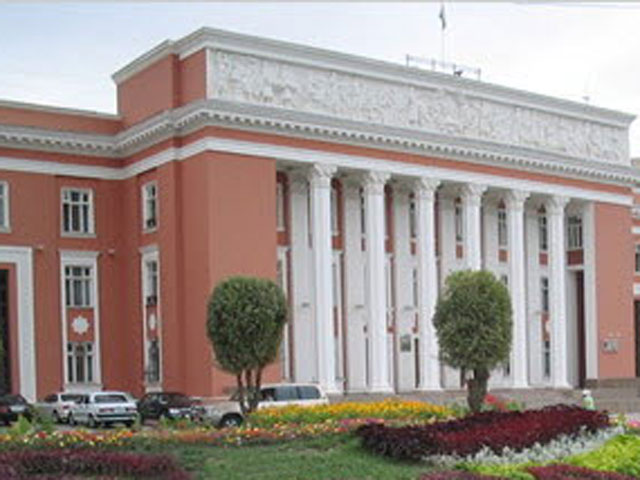
DUSHANBE, July 11, 2011, Asia-Plus -- Tajikistan’s upper house (Majlisi Milli) will consider the law on parental responsibilities in the upbringing of their children at its next session that will take lace on July 21.
Shavkat Saidov, an aide to the Majlisi Milli speaker, says the session will also consider laws requiring amendments to a number of applicable laws as well as the penal code.
The legislation was approved by the lower house (Majlisi Namoyandagon) of parliament on June 15. It must still be seconded by the upper house and signed by the president before going into effect.
We will recall that the bill on holding parents responsible for their children’s action and education was worked out last year on president’s initiative. After detailed discussion at an October 29 government session the bill was returned as requiring improvement. The government considered the bill repeatedly at a December 14, 2010 meeting. Addressing the meeting, President Rahmon offered to submit the bill for a nationwide discussion. The law was published several months ago for public discussion.
In the meantime, many believers in the country are critical of the parental responsibility bill that would ban children under 18 from worshipping in mosques, churches and other houses of worship.
Some local experts say the main target of the parental responsibility law is the Muslim children as the authorities are increasingly concerned about young people coming under the influence of religious extremists.
Radio Liberty’s Tajik Service reported on June 17 that a prominent Tajik religious leader and former deputy prime minister has criticized the parental responsibility law as being “openly against the will of God.” Turajonzoda said that under the legislation, parents whose underage children are caught attending prayers would be held legally responsible for allowing them to do so. He also criticized an amendment to Tajikistan''s penal code approved by parliament on June 15 that makes the opening of illegal religious schools punishable by between five and 12 years in jail. Previously, running such illegal schools incurred only an administrative punishment or a fine.


GBAO and Khatlon province complete spring draft target early
Chronicle of the month: March, 2026
Donald Trump states US ready to end war with Iran without a Deal
Kyrgyzstan launches domestic production of national currency
Windy April: weather forecast for Tajikistan
Tajikistan faces continued religious freedom challenges
The Judo Grand Slam in Dushanbe: what to expect
New developments in Isfara: schools, power substation, and coal mine opened
Iran claims drone factory in Tajikistan, but no evidence surfaces
Nuclear raid or breaking the blockade: why Trump wants thousands of Marines and paratroopers off the shores of Iran
All news
Авторизуйтесь, пожалуйста