




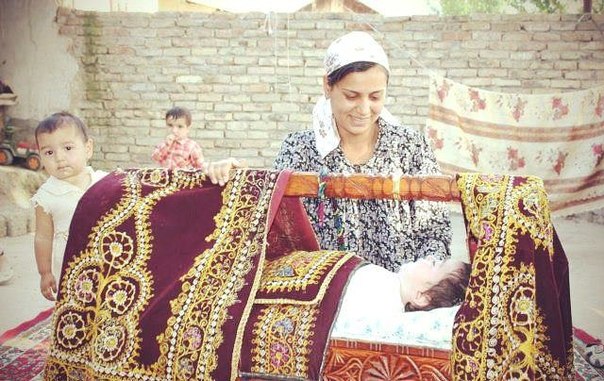
DUSHANBE, May 16, 2014, Asia-Plus -- Save the Children has released its annual report, The State of the World''s Mothers (SOWM).
The report ranks Tajikistan 134th among 178 countries in terms of maternity condition. Tajikistan has the worst maternity conditions among the CIS nations.
Thus, the 2014 SOWM report ranks Russia 62nd, Kazakhstan 63rd, Turkmenistan 82nd, Kyrgyzstan 1008th, and Uzbekistan 111th.
The 2014 report ranks Finland the number one place to be a mother. Somalia in the Horn of Africa replaced Democratic Republic of the Congo (ranking 178th) as the worst place in the world to be a mother. The United States is down one spot from 2013, ranking 31st.
Statistics show that 1 in 27 women from the bottom ranking countries will die from pregnancy-related causes. In addition, 1 in 7 children will die before his or her fifth birthday.
The 2014 report focuses on saving mothers and children in humanitarian crises. It finds that over half the 800 maternal and 18,000 child deaths every day take place in fragile settings which are at high risk of conflict and are particularly vulnerable to the effects of natural disasters.
The report notes that maternal deaths and child mortality in the most challenging countries of the world can be dramatically cut when efforts are made to improve services for mothers and children.
“We urgently need to increase access to healthcare in places where state capacity is weak and conflict and insecurity is widespread. All children have the right to survive, no matter where they are born. Many of these deaths are avoidable, and we can help to prevent them with the right plans and investments before, during, and after a crisis has hit or fighting has intensified.”
The following are the 2014 SOWM report key findings:
- More than 60 million women and children are in need of humanitarian assistance this year;
- Violence and conflict have uprooted more families than at any time on record;
- Since the Mothers’ Index was launched in 2000, the majority of the bottom 10 countries have been in the midst of, or emerging from, a recent humanitarian emergency;
- Civil war in the Democratic Republic of the Congo has led to horrific abuses against women and children, and claimed more than 5.4 million lives. But less than 10 percent of these deaths have occurred in combat. Most deaths have been due to preventable or treatable causes such as malaria, diarrhea, pneumonia, newborn causes and malnutrition;
- Syria’s civil war has had a devastating impact on mothers and children. At least 1.3 million children and 650,000 women have fled the conflict and become refugees in neighboring countries, while over 9 million people inside Syria are in need of lifesaving humanitarian assistance;
- The Philippines’ resiliency is being tested by more frequent and increasingly severe emergencies. Typhoon Haiyan on November 8, 2013 was one of the most destructive typhoons to ever hit land. It killed more than 6,000 people, devastated more than 2,000 hospitals and health clinics and destroyed countless health records and computer systems;
- In the United States, despite the lessons learned from Hurricane Katrina and other recent disasters, many gaps remain in emergency planning and preparedness. While the conditions facing mothers and children in the U.S. are very different from those in developing or middle-income countries, there are common challenges, including the resilience of health care and other essential services, and the extent to which humanitarian response reaches those mothers and children in greatest need.
The State of the World''s Mothers report (SOWM report) is an annual report by the Save the Children USA, which compiles statistics on the health of mothers and children and uses them to produce rankings of more than 170 countries, showing where mothers fare best and where they face the greatest hardships. The rankings are presented in the Mothers’ Index, which has been produced annually since the year 2000.


GBAO and Khatlon province complete spring draft target early
Chronicle of the month: March, 2026
Donald Trump states US ready to end war with Iran without a Deal
Kyrgyzstan launches domestic production of national currency
Windy April: weather forecast for Tajikistan
Tajikistan faces continued religious freedom challenges
The Judo Grand Slam in Dushanbe: what to expect
New developments in Isfara: schools, power substation, and coal mine opened
Iran claims drone factory in Tajikistan, but no evidence surfaces
Nuclear raid or breaking the blockade: why Trump wants thousands of Marines and paratroopers off the shores of Iran
All news