




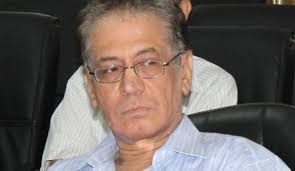
DUSAHNBE, June 25, 2014, Asia-Plus -- “If Westerners were really keen to undermine our stability, they would not need to try particularly hard. You do not need to arrange any “color revolutions” or riots; all you need to do is cut our access to financial resources” —Parviz Mullojonov, renowned Tajik political analyst looking into the recent developments in the country.
The recent comments by Sherali Khairulloev, the presidential adviser [on national security], that the scriptwriters and conductors of the events that occurred in [Tajikistan’s eastern provincial capital of] Khorog on May 21, are based in Dushanbe, has all the chances of becoming one of the most talked about, but vague, of all official statements in the republic. First of all, this is due to its briefness and incompleteness. Perhaps, in such cases, officials have to negotiate to the end or not say anything at all. Otherwise, as it is already happening, every citizen will interpret such a statement in his/her own way and search for meaning, even where there is none, and the number of questions will only rise.
For me, in particular, it was unclear who falls under the category of persons who, while in Dushanbe, "from the outside are trying to solve the problems of Badakhshan, who are not even citizens of Tajikistan and they do not have families, children or relatives in Khorog"? In addition, it is unclear how these individuals are able to talk on the phone with Khairulloev himself (as follows from the statement)?
And if they do not have Tajik citizenship and destabilize the situation in the country, then why do they reside freely in Dushanbe?
In addition, as it is known, the riots on May 21 started after a police operation. Does this mean that the mysterious "scriptwriters and provocateurs", being in Dushanbe, have the ability to influence the planning of a police operation, or at least they have access to the operational information on the time and the operation’s venue? And if it is so, then it becomes even more interesting: What kind of forces or persons was Sherali Khairulloev referring to, and was this just his own opinion or did he just in such an obscure manner reflect the dominant point of view of authorities-at-large?
Apparently, while experts and journalists have asked themselves these questions, some of the "most conscious" Tajik citizens have already made their own far reaching conclusions based on Khairulloev’s statement. Anyway, it is difficult to explain otherwise the attack on the British Embassy by a group of picketers, who threw stones in protest, as some witnesses say, due to the Ambassador’s visit to Badakhshan. Most likely, these [stone-throwing] citizens are of the same group of protesters, who at one time carried out several attacks on the office of the Social Democrats [Social Democratic Party of Tajikistan], and who last week, threw tomatoes at Muhiddin Kabiri—the chairman of the Islamic Revival Party.
The pattern and methods in these cases are very similar: A core group consisting of women, shouting accusations of undermining stability, is in front, and behind them – are a few young men as support power. As a rule, the police arrive, when the action is nearly completed, and all that can be said is said, and all that can be thrown –from tomatoes to stones– are thrown. From one case to another the level
of aggression increases with words and shouts turning into violent actions.
The West is interested in stability
However, if the recent protesters in front of the British Embassy are "guessed" correctly, it turns out that Sherali Khairulloev in his speech by "scriptwriters and organizers" of the unrest in Khorog really meant ‘international organizations’.
Frankly speaking, it is difficult to understand the logic of these charges as on one hand, our government depends on grants and loans from international organizations, accepts their help and our stability largely rests, that is to say, on the support of Western financial institutions. On the other hand, we suspect international organizations of undermining the very same stability; we are displeased by the travel of their representatives to the regions where their investments are especially needed in order to preserve all the same stability.
At the same time, if Westerners were really interested in undermining our stability, then they would not need to try hard. It would not be necessary to arrange any "color revolutions" or riots. It would be enough to simply cut our access to financial resources, Western loans and grants. Today, Russian media are trying to convince us that the West is aiming at undermining the stability of the post-Soviet countries, "because they are with Russia." In fact, amid the unfolding Ukrainian crisis, the West like never before is
interested in the stability and strengthening of the independence of post-Soviet states. As most Western experts believe today, the stronger and more stable the CIS countries are, the less chances are that the current Russian leadership will realize their "imperial ambitions" in the former Soviet space, which the West fears most.
Therefore, it is quite possible that in the coming years support and financial assistance to the Central Asian region will only increase. In this context, it would be more logical for Tajikistan to use the emerging
geopolitical situation in its own interest, and not to taint relations with the international community. This does not mean to drive oneself away from Russia, which still remains our main geopolitical partner; naturally, we shall somehow be involved in all integration projects promoted by the Russian leadership –from the [Eurasian Economic Community] EEC to the [Common Security Treaty Organization] CSTO. At the same time we do not have the mineral and financial resources, as Russia or Kazakhstan have, and our economy is too dependent on external factors. So, under such circumstances, to get involved following Russia in a devastating confrontation with the West – it''s like cutting a branch you are sitting
on. Integration is integration, but we have our own national interests and neither Russia nor the West is interested in maintaining stability in Tajikistan more than we, ourselves.
We need to develop a "Roadmap”
Returning to the aforementioned statement of Sherali Khairulloev, we can conclude that, according to him, the Tajik government is really concerned about the serious issue of maintaining stability in the regions. However, the matter is still limited to seeking external enemies and sending messages to citizens to be vigilant – again in the light of unclear specification of external threats.
The search for external enemies today for some reason takes the form of targeted anti-British campaign. At first, the Ambassador literally was kicked out of Khorog, and then the embassy building was stoned, now a researcher working on the program of one of the leading English universities is arrested on charges of espionage. In particular, Alexander Sodiqov really is a researcher, his status has been officially confirmed by the University of Toronto and the University of Exeter confirmed that he has been working on an officially approved research program. By accusing him, our authorities are consequently accusing two of the largest and most respected educational institutions in the West of spying. Not to mention the “discrediting” the professionalism of the British intelligence services, which, as it turns out, communicate with their "agents" in open text over the public e-mail.
Naturally, no one will believe in these charges, everyone will think of this propaganda as crazy. The deprivations of the [Tajikistan’s] image are already high and the further this case will continue to unwind the harsher they will be. And any blow to the image inevitably brings about economic losses, reduced investment attractiveness of the country, what we do not need today. However, the most interesting thing will happen if the British, in response, will block access to the offshore for some of our largest companies, which operate through the [British] Virgin Islands under their protectorate.
In fact, in today''s world no one seriously believes in the export of "color revolutions." It is not possible from outside to provoke unrest in the country or a particular region, where there are no appropriate conditions for it. Therefore, the most correct action in this situation for the Tajik leadership is to develop and propose a detailed, specific "roadmap" or, in other words, a list of measures, both short- and long-term, for the final way out of the crisis, instead of a general public call-up. The main goal of such a "road map" would be to create an environment where any external destabilization interference would be doomed to failure. In my view, such a "road map" would include two main components. First, in the short-term it is necessary to create in the [Badakhshan] province a mechanism to prevent conflicts and incidents on the ground in the form of a permanent dialogue and a platform for the exchange of opinions. For such a platform, it would be possible to create, for example, one or more joint advisory groups consisting of influential members of the local civil society, employees, authorities and law enforcement officials who would meet on a regular basis. The fact is, we respond to the event after it happens: Create a collaborative group, to investigate the causes, the course of events, and so on. This is the main problem in the region and the whole country, while it is necessary to act proactively and pre-empt conflict
situations, when the reasons for their potential manifestations are identified in advance and preventive measures are taken to resolve them. I am sure that if between the law enforcement authorities and local civil society such a practice of timely exchange and dialogue were to have been established, the May 21 [2014] incident [in Khorog] might well have been avoided. But most importantly, I must again emphasize – the use of force in the current situation in [Badakhshan] is not acceptable and will inevitably lead to the opposite results. Being well aware of the logic of security officials, I can imagine that some of them might now insist on unconditional punishment of at least some direct participants of the recent unrest. However, at present, any, even a small-scale power action in the form of the arrest of any of the listed suspects, any provocation will make further dialogue impossible and take the situation out of control of the local
civil society or law enforcement agencies. Until July 2012, the small targeted special-forces raids in Khorog would not have caused any particular problems; at the moment, any one of them will lead to large-scale consequences, as it will be perceived as a threat to the entire community, not just individuals. The authorities have created this situation themselves two years ago without thinking the political consequences of their actions, and should be fully aware of the degree of responsibility that falls on them today.
Within this framework, the logic of the security forces who deny amnesty of those who were involved in the May 21 events, in my opinion, seems to be especially unconvincing. After all, at one time in order to achieve stability, the government pardoned thousands of fighters on both sides, many of whom were actually real criminals. Some of the former warlords, who had much more serious crimes on their conscience, who were also pardoned, have become today respected businessmen and entrepreneurs. If such an action in the name of achieving peace in other regions of the country was possible before, so why it is not possible today in Badakhshan, for its preservation?
But let me continue. Secondly, in the long-term the authorities need to develop an effective plan to create jobs, and primarily for local youth and begin to implement it as soon as possible. The events of recent years have shown that unsettled youth is a major factor for social tension in [Badakhshan]. As far as I know, nothing new in this regard have to be invented as many components of such a plan and models for development have been discussed at the regional and national levels. Only political will is necessary to implement them.
In particular, there is a long time talking about building a 14-kilometer stretch of the road that would connect Ishkashim with Pakistan. In general, the implementation of such projects would allow to gradually turn [the Autonomous Mountainous Badakhshan Province, aka] GBAO into a kind of international transportation "hub", which would go through the transport and trade flows from China, Kyrgyzstan and Pakistan. And it would create thousands and thousands of jobs not only in the province but also in the adjacent regions. According to estimate of economists, only the construction of the new road to Pakistan will allow to almost reduce the prices of food and building materials in the province by half.
In this regard, it would be possible to create several free economic zones (FEZs) in the area. There is already Ishkashim FEZ in GBAO, which has well proved itself and a legal framework has been developed. Creation of a FEZ in Khorog could solve many problems associated with excessive tax pressure, reduce social tension and minimize friction with the police.
The construction of Central Asian University in Khorog is also being delayed, although its opening would create employment opportunities for local youth: it is known that in Badakhshan’s percentage of young people with higher education is one of the highest in the country.
"It is time to reconsider the strategy of development of the country"
Of course, for maximum efficiency the plan should be comprehensive in nature, that is, it must be designed and implemented as a set of sequential activities and projects. In this regard, there is no sense for Tajik leaders to spoil their image in the international community by covert infiltration of "Tomato Special Task Force” to the walls of Western embassies and representative offices. It would have much logical for themselves to develop a comprehensive, integrated program of development and reform, and not only regarding Badakhshan, but other regions of the country as well and reach out to the international financial institutions and donor countries. In the face of a new reality, it''s time to fundamentally revise the country''s National Development Strategy, which, in fact, is mainly aimed at the development of macroeconomics, and therefore no longer meets the requirements of the time. Today we need to create jobs, repatriate migrant workers and to create a strong, sustainable, modern economy as the basis for internal stability and safeguard against outside interference. Only then will no "color revolutions", external factors and underhand plotting of the geopolitical enemies pose any threats to our country.


GBAO and Khatlon province complete spring draft target early
Chronicle of the month: March, 2026
Donald Trump states US ready to end war with Iran without a Deal
Kyrgyzstan launches domestic production of national currency
Windy April: weather forecast for Tajikistan
Tajikistan faces continued religious freedom challenges
The Judo Grand Slam in Dushanbe: what to expect
New developments in Isfara: schools, power substation, and coal mine opened
Iran claims drone factory in Tajikistan, but no evidence surfaces
Nuclear raid or breaking the blockade: why Trump wants thousands of Marines and paratroopers off the shores of Iran
All news