




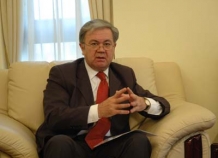
DUSHANBE, July 10, 2015, Asia-Plus – Tajik diplomat Rashid Olimov has been appointed new Secretary-General of the Shanghai Cooperation Organization.
Rashid Olimov had previously served as Ambassador of Tajikistan to the People’s Republic of China (PRC). He had been Tajik Ambassador to China since December 2005.
From December 28, 1994 to December 2005, Rashid Olimov was Permanent representative of Tajikistan to the United Nations.
From December 2, 1992 to December 27, 1994, Rashid Olimov served as Minister of Foreign Affairs of Tajikistan.
In 1991-1992, Rashid Olimov served as State Adviser to the President of Tajikistan.
Rashid Olimov was born in Dushanbe on June 23, 1953. In 1975, Olimov graduated from Tajik State University and in 1990, he graduated from the Academy of Social Sciences at the Central Committee of the Communist Party of the Soviet Union. Olimov has the scientific degree of Candidate of Sciences in Sociology.
Rashid Olimov is married with two children.
The Secretariat of the SCO is the primary executive body of the organization. It serves to implement organizational decisions and decrees, drafts proposed documents (such as declarations and agendas), function as a document depository for the organization, arranges specific activities within the SCO framework, and promotes and disseminates information about the SCO. It is located in Beijing.
Founded by the leaders of China, Russia, Kazakhstan, Kyrgyzstan, Tajikistan and Uzbekistan on June 15, 2001, the Shanghai Cooperation Organization (SCO) is an intergovernmental organization. Except for Uzbekistan, the other countries had been members of the Shanghai Five; after the inclusion of Uzbekistan in 2001, the members renamed the organization.
The Organization currently has six full members -- China, Kazakhstan, Kyrgyzstan, Russia, Tajikistan and Uzbekistan. Afghanistan, India, Iran, Mongolia and Pakistan are five observer states, and SCO’s dialogue partners include Belarus, Sri Lanka and Turkey.
The Organization’s six full members account for 60% of the land mass of Eurasia and its population is a quarter of the world''s population. With observer states included, its affiliates account for about half of the world''s population.


GBAO and Khatlon province complete spring draft target early
Chronicle of the month: March, 2026
Donald Trump states US ready to end war with Iran without a Deal
Kyrgyzstan launches domestic production of national currency
Windy April: weather forecast for Tajikistan
Tajikistan faces continued religious freedom challenges
The Judo Grand Slam in Dushanbe: what to expect
New developments in Isfara: schools, power substation, and coal mine opened
Iran claims drone factory in Tajikistan, but no evidence surfaces
Nuclear raid or breaking the blockade: why Trump wants thousands of Marines and paratroopers off the shores of Iran
All news