




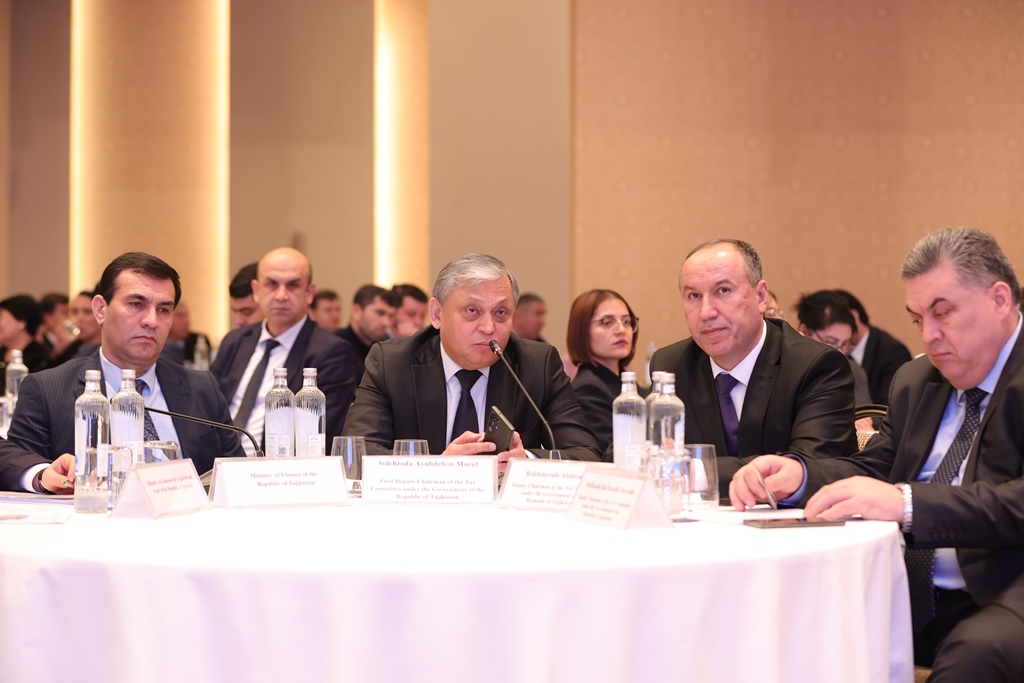
On December 22, a joint meeting of the Coordination Committee on Tax Reform and the Taxpayer Advisory Council took place at the Crowne Plaza Hotel in Dushanbe, initiated by the Tax Committee of Tajikistan. The event focused on the implementation and achievements of the "Tax Reform Operation Project" and the prospects for the digitalization of the country's tax sector.
Representatives from various ministries, international organizations, domestic companies, and business associations participated in the meeting.
The First Deputy Chairman of the Tax Committee, Ayubjon Solehzoda, provided an update on the project's progress. He noted that the project, supported by the World Bank, aligns with the goals of the National Development Strategy of Tajikistan until 2030, the Tax Administration Development Program for 2020-2025, and the Digital Economy Concept. The project aims to create an effective, transparent, and predictable tax system, strengthen the state's financial stability, increase investment attractiveness, and promote entrepreneurship.
Solehzoda emphasized that the project has contributed to improving the quality of government services in the tax sector by implementing modern digital platforms and automated tax management systems. "It will create conditions for a sustainable increase in government budget revenues by strengthening tax discipline, expanding tax bases, and improving the institutional effectiveness of tax authorities," he said.
"The goal of this project is to create a transparent and effective tax system, favorable conditions for business activity, and increase voluntary compliance with tax legislation," he added, noting that tax policies are changing worldwide, and sector development is impossible without reform.
Farhod Vosidiyon, Deputy Minister of Economic Development and Trade of Tajikistan, shared the results of the coordination of the tax administration program and tax reform projects with government agencies. He pointed out that the monitoring results showed significant successes in the digitalization of the tax system: "The use of computer programs and modules, artificial intelligence, and the introduction of numerous electronic services for taxpayers have led to greater transparency and a reduction in the shadow economy," he stated.
Representatives from the World Bank expressed their satisfaction with the project's results, noting that it is one of the most successful and unique initiatives. They reaffirmed the Bank’s continued support for projects aimed at tax reform.
The meeting also addressed important issues such as providing certain tax incentives for taxpayers, VAT exemptions for entrepreneurs and companies importing solar panels and related components, as well as topics related to the development of green economy initiatives, electric vehicles, and environmental protection.
Additionally, a Q&A session was held between the meeting participants and the Tax Committee representatives.
The meeting concluded with a focus on the positive impact the project will have on Tajikistan's socio-economic development. It was noted that the project will enhance the effectiveness and transparency of tax administration, foster greater trust among entrepreneurs, improve the business environment, and create the necessary conditions for attracting investment.
President Emomali Rahmon, in his recent address, instructed the swift adoption and implementation of the "New Tax Administration Development Program for 2026-2030." To fulfill this directive, the Tax Committee has begun preparing the new program, with key objectives including digital transformation, reducing the shadow economy, and enhancing tax transparency.
 Руcский
