




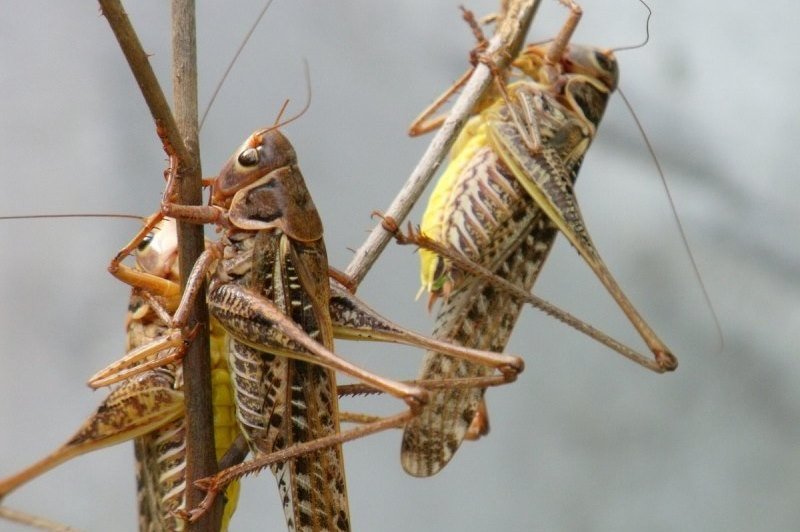
Since early June, residents of Dushanbe have noticed a significant increase in locust activity, particularly during the evening hours. The insects have even been spotted flying into homes through open windows, raising concern among some residents and prompting discussions on how to get rid of them. Others, however, have taken the situation lightly, joking about the influx. But is this locust surge truly dangerous? Environmental experts say no—at least not for urban dwellers.
No threat to city residents
According to environmentalist Alikhon Latifi, the presence of locusts in Dushanbe is not a new phenomenon. Most of the insects observed belong to the subfamily Acrididae—grasshoppers known for their solitary behavior and commonly found in steppes and deserts.
Latifi notes that migratory locusts also appear in the region, with their arrival often dependent on wind patterns. While they may establish new populations in the areas where they land, they pose no direct threat to city residents. “The real damage is to agricultural crops and pasturelands,” Latifi emphasized.
In a previous report, Asia-Plus highlighted that the locust population surge is linked to high temperatures and prolonged droughts. With climate change and declining rainfall, pest development cycles have accelerated—an issue particularly evident in Tajikistan and neighboring Uzbekistan.
Control measures underway
Efforts to combat the locust outbreak are already in progress across Tajikistan. In Khatlon province, authorities have been actively treating affected areas since March using tractors, sprayers, and drones—including unmanned aerial vehicles—to target adult locusts. Both chemical and biological control agents are in use.
In Sughd province, approximately 30,000 hectares of land are being treated, with key focus on Devashtich, Spitamen, Mastchoh, Bobojon-Ghafourov, and Zafarobod districts. Additional regions, including the Rasht Valley, are coordinating pest control efforts with Uzbekistan and Afghanistan using the Automated System for Data Collection (ASDC).
Latifi also pointed out that certain bird species, including mynas, rosy starlings, and jackdaws, naturally help keep the locust population in check. “While they can’t eliminate the insects completely, they do make a difference,” he said.
“Yes, it’s unpleasant when they fly into your home, but they are harmless. City residents really have nothing to worry about,” Latifi reassured.
 Руcский
