




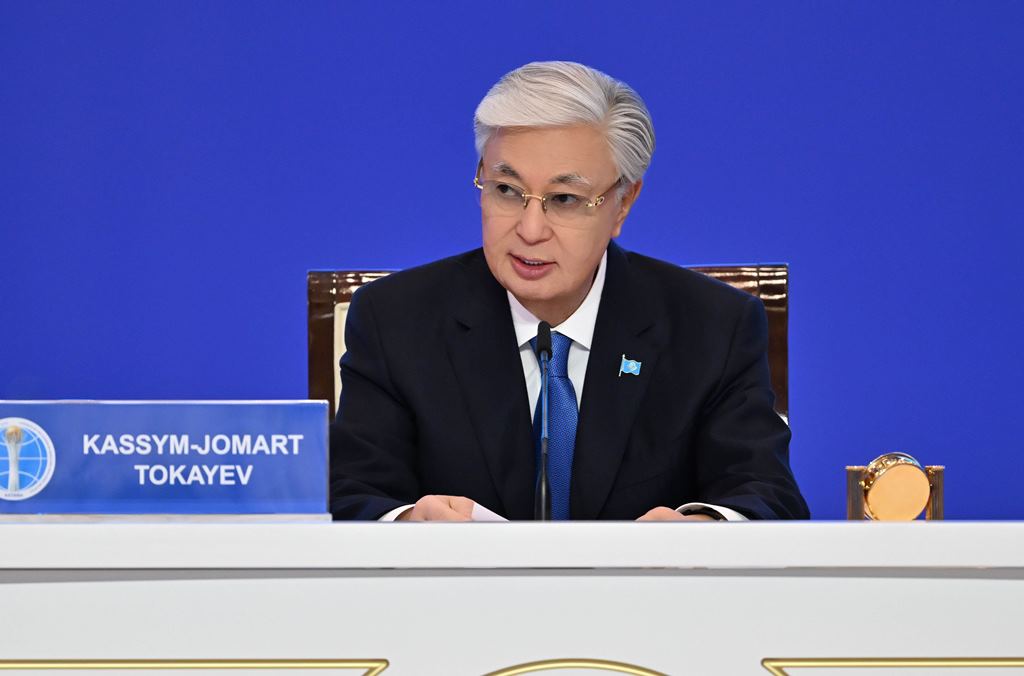
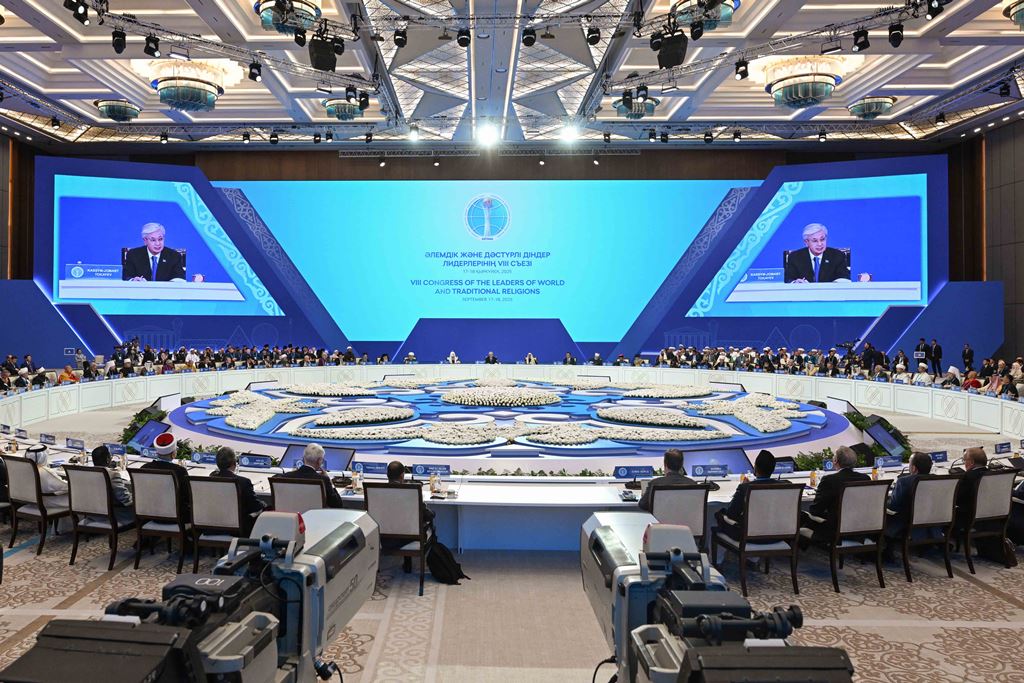
The risk of a global nuclear conflict has reached its highest level in decades, Kazakh President Kassym-Jomart Tokayev warned at the Congress of Leaders of World and Traditional Religions in Astana, Asia-Plus’s correspondent reports from Astana.
Tokayev cautioned that growing geopolitical instability and an accelerating arms race could have catastrophic consequences.
“The risk of nuclear conflict is extremely alarming, with experts assessing the likelihood of such an Armageddon as the highest in recent decades,” he said. “Instead of constructive initiatives and détente, confrontational thinking is gaining momentum, geopolitical divides are widening, and social tensions are rising.”
The president stressed that constructive diplomacy must take priority as the main tool for fostering dialogue, overcoming mistrust, and building international confidence.
Hybrid wars and civilizational crisis
Tokayev also highlighted the rise of hybrid wars, which, though lacking clear frontlines, claim many lives, force mass displacement, and inflict heavy damage on the global economy. Quoting Rudyard Kipling — “East is East, and West is West, and never the twain shall meet” — he argued that despite deep differences, nations must unite to prevent nuclear catastrophe.
He further warned of what experts describe as a “civilizational crisis,” marked by the merging of ultranationalism with patriotism, confusing young generations, and by clashes between right-wing conservative and liberal ideologies that destabilize politics in many countries.
“It is crucial to promote interethnic, interfaith, and international tolerance and mutual respect,” Tokayev added.
Climate change — a dire threat for Central Asia
The Kazakh leader placed special emphasis on climate change, calling it a pressing moral as well as scientific and economic issue. He stressed that Central Asia is warming faster than many other regions, leading to droughts, glacier melt, and dwindling freshwater reserves.
“Spiritual traditions teach us to live in harmony with nature, because Earth is our common home given by the Creator, and caring for it is our shared responsibility,” Tokayev said.
He proposed that religious leaders work together to draft a joint declaration on ecological responsibility, rooted in spiritual and moral values.
Artificial intelligence and ethics
Tokayev also pointed to the rapid development of artificial intelligence as an area requiring careful moral and ethical oversight. He noted that clergy, through their moral authority, have the power to influence public values by spreading ideas of peace, justice, and respect for nature.
He suggested that religious leaders could play a central role in shaping ethical standards to ensure that AI and other emerging technologies benefit humanity without undermining moral principles.
To this end, the president proposed the creation of an Interfaith Commission on AI Ethics tasked with developing universal principles for the responsible use of neural networks and advanced technologies.
 Руcский
