




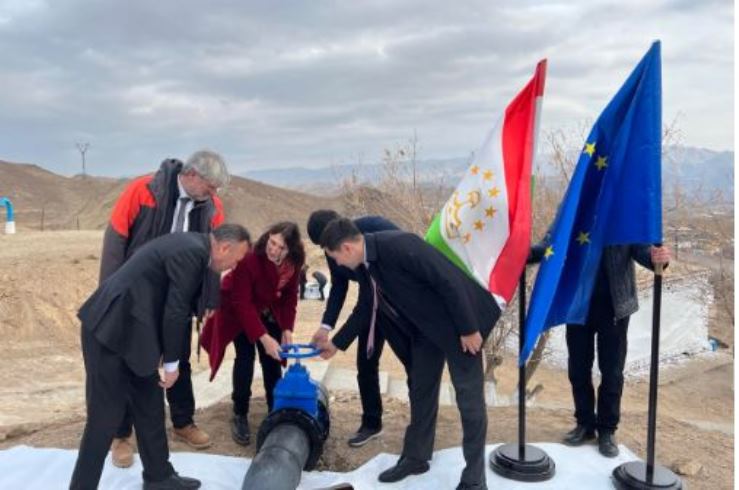
The European Union and Republic of Tajikistan today marked the successful completion of two newly constructed pipelines in the city of Istiqlol (formerly Taboshar), an important milestone under the EU’s long-standing commitment to improving environmental safety and addressing uranium legacy sites in Central Asia.
The opening ceremony, held in Istiqlol yesterday, brought together representatives of the European Union, the Ministry of Industry and New Technologies of the Republic of Tajikistan, local authorities, and international partners supporting the initiative.
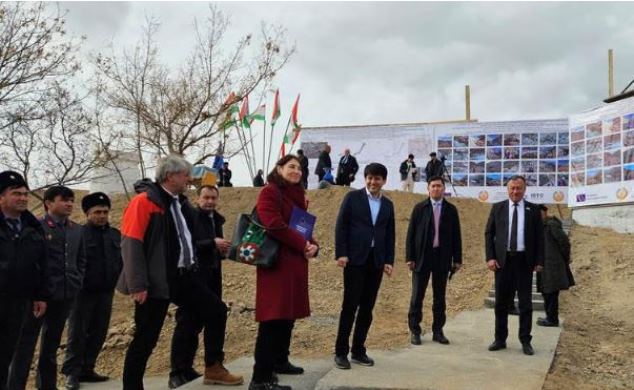
Speaking at the opening ceremony, Ms. Isabel Úriz Hernández, Head of Cooperation at the EU Delegation to Tajikistan emphasized the EU’s continued support to Tajikistan: “The European Union is proud to support this important project in Istiqlol. Addressing the environmental legacy of historical uranium mining is a shared responsibility, and today’s achievement reflects our commitment to supporting the safety, resilience, and well-being of communities in Tajikistan.”
Mr. Aziz Nazar, Deputy Minister of Industry and New Technologies, noted the value of EU cooperation: “This project is an important step forward for the people of Istiqlol. We highly appreciate the European Union’s support and the strong partnership that made this result possible.”
Mr. Qayum Mahmoudzoda, Chairman of Istiqlol city administration, noted that these pipelines will have an immediate positive impact on residents: “For our community, these new pipelines will make an immediate and meaningful difference. For the first time, we can rely on a safe system that protects our neighborhoods from contaminated water and ensures a steady flow of clean spring water for everyday use. This project brings reassurance to local families and gives us confidence in a healthier, safer future.”
This infrastructure was implemented through the International Science and Technology Center (ISTC), which coordinated construction activities and engagement with national stakeholders, based on feasibility assessments and engineering design provided by G.E.O.S. Ingenieurgesellschaft mbH.
The new pipelines provide a sustainable, long-term solution to the long-standing issue of contaminated mine water originating from the former uranium mine. This water has migrated through fractured geological layers and, at times, toward residential areas, posing environmental and public health risks. The EU-funded project redirected the flow safely away from populated areas, reducing risks for local communities and contributing to long-term environmental protection. The second pipeline provides now the residents with clean and fresh water coming directly from the mountains.
The EU has supported Tajikistan and other Central Asian countries for more than a decade in addressing the environmental and health impacts of former uranium mining operations. The completed pipelines represent a key investment under this program, offering a practical and low maintenance solution tailored to local conditions.


GBAO and Khatlon province complete spring draft target early
Chronicle of the month: March, 2026
Donald Trump states US ready to end war with Iran without a Deal
Kyrgyzstan launches domestic production of national currency
Windy April: weather forecast for Tajikistan
Tajikistan faces continued religious freedom challenges
The Judo Grand Slam in Dushanbe: what to expect
New developments in Isfara: schools, power substation, and coal mine opened
Iran claims drone factory in Tajikistan, but no evidence surfaces
Nuclear raid or breaking the blockade: why Trump wants thousands of Marines and paratroopers off the shores of Iran
All news
Авторизуйтесь, пожалуйста